
What is gripe water for babies?
Gripe water is a liquid sold for stomach discomfort in babies. Labels may mention gas, colic, hiccups, or fussiness.
The name covers many products with no standard recipe. Common gripe water ingredients may include:
- Fennel, ginger, dill, or chamomile
- Sodium bicarbonate, also called baking soda
- Sweeteners, flavors, or preservatives
- Live bacteria called probiotics
Ingredients change widely across countries, brands, and bottle versions. Advice for one bottle cannot safely cover another.
Older recipes sometimes contained alcohol or large sugar amounts. Many modern brands leave them out, although labels need checking.
Many United States stores sell gripe water as a supplement. The FDA reviews supplement problems after products enter stores. Supplements reach stores without FDA approval for safety or claimed benefits.
Other countries may classify similar products under very different rules. Follow only the exact age and dose directions printed on your bottle.
Why can online gripe water doses mislead parents?
Dose advice may belong to another bottle or country. In United States stores, many products appear as dietary supplements.
A current United Kingdom leaflet lists one named product as medicine. Its leaflet sets product-specific ages, timing, doses, and storage rules.
Those directions apply only to that particular named bottle within Britain. They cannot transfer safely to another product sharing the name.
Check the country and bottle before measuring any dose. The bottle label controls age, amount, timing, storage, and expiry. If online advice conflicts with packaging, ask a pharmacist or doctor.
Does gripe water work for colic, gas, or hiccups?
Strong studies have found no proven colic relief. Medical reviews found no randomized trials testing these products.
Randomized trials place babies into comparison groups using chance. Using chance reduces differences that can change results.
One calmer evening after a dose never proves the product worked. Crying may ease naturally while families test a new remedy.
What research found
A 2015 Indian survey included 335 mothers with their young infants. About 64 percent reported giving gripe water to their babies.
Researchers found more colic, vomiting, and constipation among those surveyed babies. The survey cannot show that the product caused those problems.
Symptoms may already be present when parents start the product. That timing makes the cause hard to identify.
Colic
Colic describes repeated crying in an otherwise healthy, growing baby. Colic lacks one confirmed stomach cause or matching treatment. The NHS colic page finds no evidence supporting herbal colic products. Fever, poor feeding, fewer wet diapers, or weight loss need medical help.
Gas
Babies swallow air during feeding, crying, and daily movement. Feeding pace, bottle flow, and burping can affect swallowed air. Sodium bicarbonate, called baking soda at home, can reduce stomach acid. Studies have found little proof that these varied products relieve intestinal gas.
Hiccups
Most infant hiccups end without any treatment. Some labels mention hiccups, but strong evidence is missing. Pause when hiccups make feeding or swallowing difficult. Burp your baby, wait briefly, then restart feeding when comfortable.
Reflux and spit-up
Gripe water cannot treat reflux disease or painful feeding. Many healthy babies spit up while their digestive system develops.
Smaller feeds and upright holding afterward may sometimes reduce ordinary spit-up. The AAP infant stomach page lists warning signs. They include painful feeds, poor growth, and forceful vomiting.
Is gripe water safe for newborns?
Safety depends on your baby and exact product. Age, ingredients, health, swallowing, and bottle quality change the risk. Newborns can become ill quickly with few early clues.
Parents considering gripe water for newborns should seek medical advice before use. The gripe water age limit changes across brands and products. Another website or bottle may show different directions. Ask your doctor before using gripe water during the newborn period.
WHO defines exclusive breastfeeding as breast milk without extra foods or drinks. WHO lists exceptions for prescribed medicines, vitamins, minerals, and rehydration drinks.
Rehydration drinks replace water and salts lost during illness. Herbal gripe-water products count as extra drinks under the WHO definition.
Our article about when babies can drink water covers the feeding timeline. Your doctor can answer questions about feeding or medical exceptions.
What should parents check on the label?
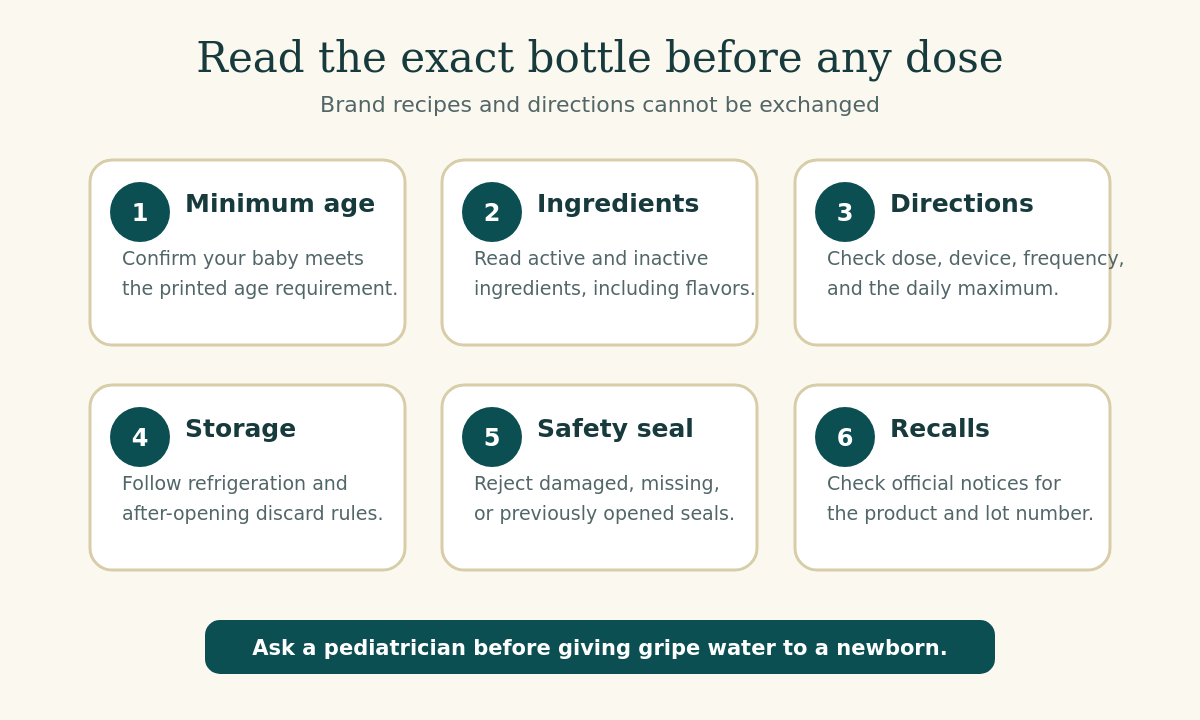
Read the bottle label before making any decision. Review each point before opening or measuring the bottle. First confirm the country and product name shown on packaging.
- Minimum age: Confirm the printed minimum age matches your baby.
- Ingredients: Read all active ingredients, flavors, sweeteners, and preservatives.
- Dose: Check the amount, measuring device, frequency, and daily maximum.
- Storage: Follow refrigeration rules and the after-opening discard date.
- Safety seal: Reject damaged, missing, or previously opened seals.
- Recall status: Check official notices using the name and lot number.
Avoid products with missing ingredient lists or unreadable directions. Never use bottles beyond expiration or the printed after-opening discard date. Plant ingredients can cause allergies or interact with some medicines. Ask your doctor about every listed herb.
How much gripe water can a baby have?
Gripe water dosage depends on the bottle and your baby. Use only the label amount your doctor approves.
Never copy doses from another bottle, article, or parent. Strengths, age groups, droppers, and daily limits can differ greatly. Two bottles may list different amounts for babies of equal ages.
Continued crying never makes an extra dose safe. Ongoing symptoms may show product failure or another problem.
Use only the marked tool supplied with that bottle. Household teaspoons cannot measure small liquid amounts accurately. The AAP liquid medicine instructions recommend a marked tool matching the dose size. Place your baby fully upright before giving the measured liquid.
When using a syringe, place its tip inside the cheek. Release liquid slowly, away from the throat. Stop immediately if coughing, choking, breathing changes, or repeated vomiting begin.
Never force liquid into a crying or struggling baby. Call your doctor when your baby struggles to swallow safely.
When should parents use gripe water?
No single schedule works safely across every brand. Follow your bottle label and doctor instructions.
Never use it after every feeding as a routine. Repeated use may hide a feeding problem or postpone medical help.
What gripe water side effects can parents notice?
Possible reactions include rash, swelling, vomiting, diarrhea, or breathing changes. Choking can occur when liquid enters too quickly. Symptoms after a dose may also come from illness.
Stop using it and call your doctor. Your doctor can check the symptoms and likely cause.
Have the bottle, package, lot number, dose, and time available nearby. Those details help doctors and safety teams study the problem.
Get emergency help immediately
Seek immediate emergency help for breathing trouble or blue lips. Lip, face, or tongue swelling may signal a severe allergic reaction. Choking or stopped breathing also requires emergency help. Follow local emergency instructions while awaiting urgent medical help.
Contact a doctor promptly
Call a doctor after repeated vomiting, spreading rash, ongoing diarrhea, or poor feeding. Unusual sleepiness or fewer wet diapers need a doctor. An FDA warning letter from 2025 described serious complaints about one company. Reports included choking, stopped breathing, hospital visits, and other medical problems.
Those reports cannot show that the product caused every reported event. They show why serious complaints need prompt medical attention.
A 2019 FDA recall covered material that failed to dissolve and made swallowing harder. That recall covered one product, never every gripe-water brand.
When does a crying baby need medical help?
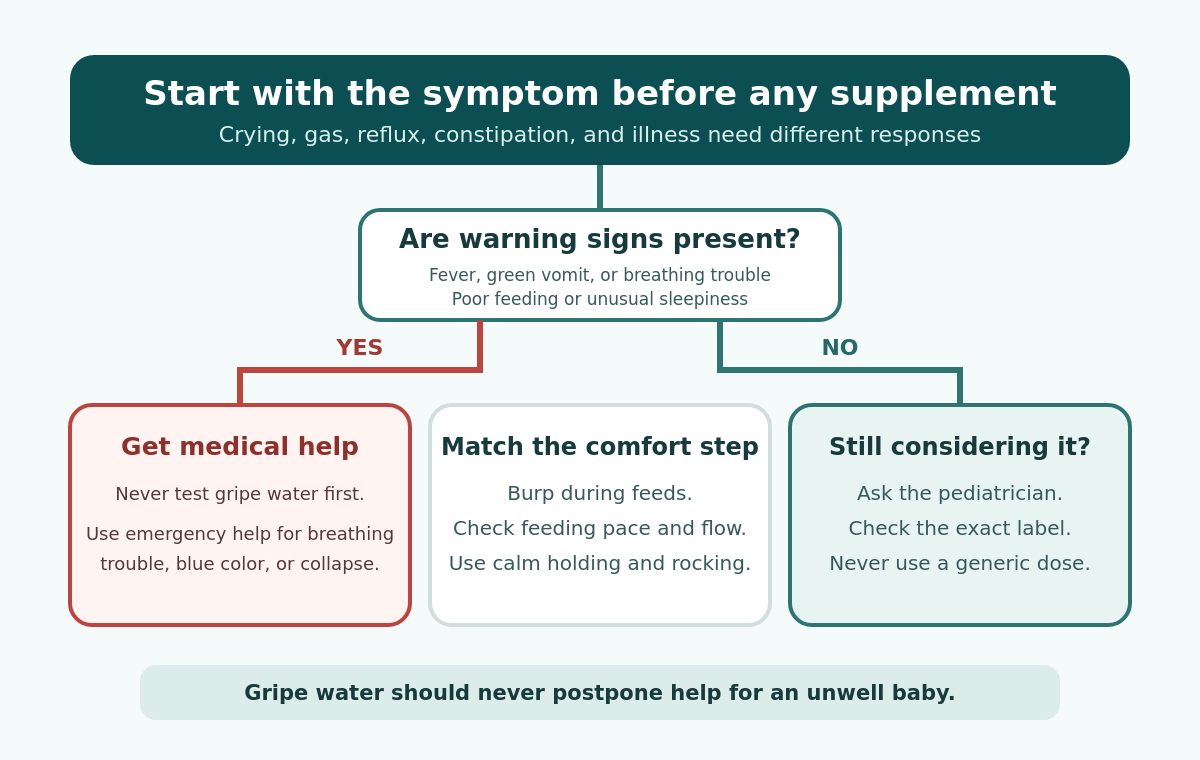
Warning signs come before every supplement question. Call a doctor when crying comes with worrying symptoms. Crying alongside fever needs medical help before another attempted dose.
- Babies under three months need urgent help at 100.4°F or 38°C.
- Call a doctor after green, forceful, or repeated vomiting.
- Blood in vomit or poop requires medical help.
- A swollen, firm, or painful belly needs medical help.
- Poor feeding or fewer wet diapers can warn about dehydration. Dehydration happens when the body loses too much water.
- Get help when your baby seems limp, weak, or difficult to wake.
- Breathing trouble, blue lips, or a weak cry need emergency help.
- Poor growth or lasting feeding pain needs a doctor.
The AAP fever advice confirms the fever threshold for young babies. NICE postnatal advice lists green vomit among serious warning signs.
Seek help when your baby behaves differently and worries you. Never test any supplement before seeking needed medical help.
What can parents try before gripe water?
Match each comfort step directly to the symptom you observe. Warning signs need medical help before any home option.
Swallowed air during feeding
Offer a feed before hunger causes frantic sucking. Hold your baby upright and pause for burping during each feed. Bottle-feeding families can check nipple flow and bottle position. Milk flowing quickly may cause coughing, gulping, or swallowed air.
Ordinary fussiness or colic
Try holding, gentle rocking, quiet white noise, or warm bathing. Reduce noise and lights when activity makes crying worse. Continue your normal feeding routine unless a doctor recommends another plan. Avoid repeated formula changes without medical advice.
Ordinary spit-up
Ask your doctor about smaller, more frequent feeds. Hold your baby upright for fifteen to twenty minutes afterward. Place babies flat on their backs for every sleep. The AAP reflux sleep advice warns against wedges and inclined sleepers.
Crying that exhausts you
Place your baby safely in a cot before stepping away. Ask another trusted adult for help whenever possible. Never shake your crying baby, even for one second. The NHS crying advice recommends a brief break after securing your baby.
Common questions from parents
Daily use requires both doctor approval and exact label directions. Repeated doses can hide feeding problems or ongoing illness. Write each dose down to prevent accidental repeats.
No reliable research proves exactly how quickly it works. Never repeat a dose because relief seems slow.
Timing depends on the exact directions printed on your bottle. Ask your doctor when the label leaves any doubt.
Check the exact label before mixing any product into milk. If milk remains, parents cannot know how much gripe water the baby swallowed.
The NHS advises prepared bottles contain only milk, formula, or water. Measure each dose with the marked tool from its bottle.
Never combine gripe water with infant gas drops without doctor approval. Different ingredients and dosing rules can cause mistakes.
Studies show no benefit for treating constipation with the product. Constipation in babies needs advice from your doctor.
Studies show no benefit for treating teething pain. Ask your doctor about safe teething comfort for your baby.
Gripe water cannot treat chest mucus, colds, or breathing problems. Breathing trouble always needs emergency medical help.
Many infant gas drops contain a gas medicine called simethicone. Ingredients and dosing rules differ across brands. Research has found little colic benefit from either option.
What should parents do next?
Begin with symptoms, age, feeding, and any warning signs. Review the exact bottle with your doctor before offering a dose. Choose comfort steps that match the problem you can see.
Watch feeding, breathing, wet diapers, vomiting, and unusual sleepiness. Seek medical help when crying appears with illness, pain, or poor feeding. Bring the bottle and dose details if a reaction appears.
Sources
- U.S. Food and Drug Administration: FDA 101, Dietary Supplements
- U.S. Food and Drug Administration: 2025 warning letter to M.O.M. Enterprises
- U.S. Food and Drug Administration: 2019 DG Baby Gripe Water recall
- UK Electronic Medicines Compendium: Woodwards Gripe Water patient leaflet
- World Health Organization: Breastfeeding questions and answers
- American Academy of Pediatrics: Abdominal Pain in Infants
- American Academy of Pediatrics: Using Liquid Medicines
- American Academy of Pediatrics: Reflux Sleep Safety
- American Academy of Pediatrics: Fever Advice
- NHS: Colic
- NHS: Soothing a Crying Baby
- NHS: Drinks and Cups for Babies and Young Children
- NICE: Postnatal care recommendations
- Journal of Clinical and Diagnostic Research: Gripe Water Administration in Infants
- BMJ Clinical Evidence: Colic in infants
- Australian Prescriber: Infantile colic