Key Takeaways
- Generic paneer contains about 18.9 g protein per 100 g.
- Amul Fresh Paneer lists 20 g protein per 100 g.
- Use packet values for precise product calculations.
- Cooking changes water weight while most protein remains.
- Children need pasteurized paneer, safe pieces, and varied meals.
What Protein Number Should You Use for 100 g Paneer?
Use 18.86 g protein as a general Indian reference. The Indian Food Composition Tables 2017 lists that average for paneer code L003.
Researchers sampled paneer across six Indian regions for that table. The national value offers a useful reference, yet no universal label.
Named products can place another figure on their nutrition panels. Amul Fresh Paneer lists 20 g protein per 100 g.
The national table and product panel answer different questions. One describes a broad Indian food reference. The other describes one named retail product.
Use the Indian table when no product panel exists. Use the packet whenever precise food tracking affects your meal.
How Do You Calculate Protein From a Paneer Label?
Read the protein amount and reference weight together first. Then weigh the paneer portion before adding other ingredients.
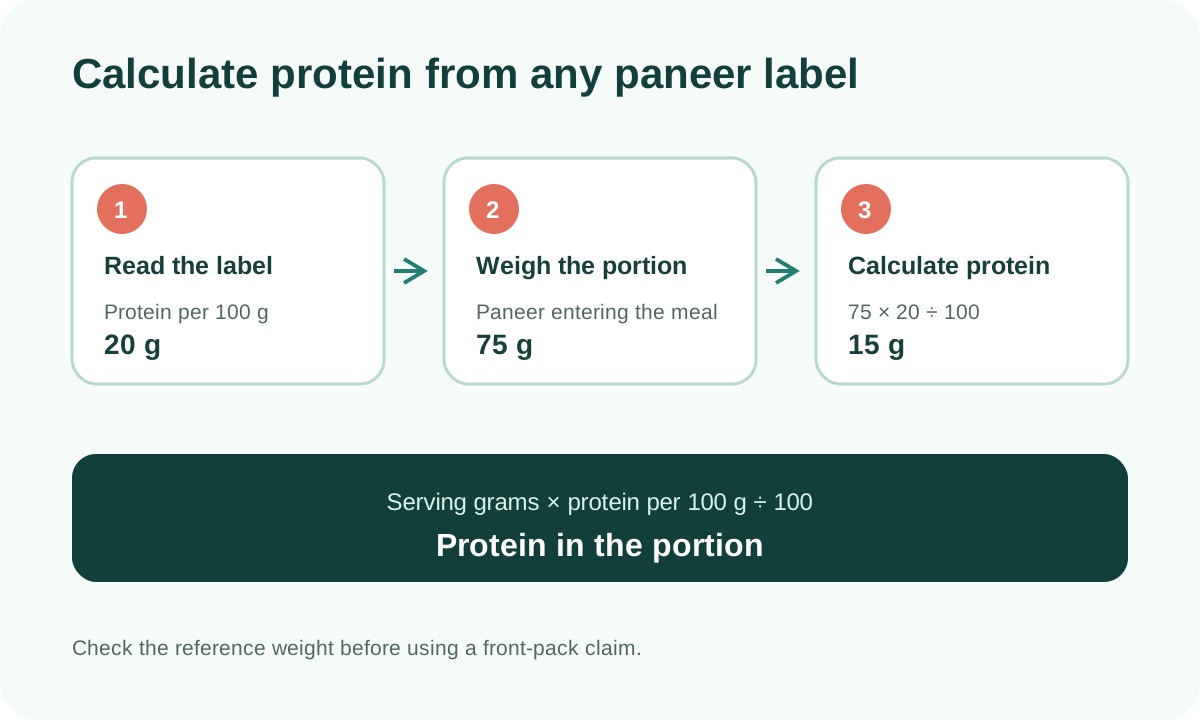
Follow these three steps for a per-100-g nutrition panel:
- Find protein listed for each 100 g paneer.
- Weigh the paneer amount entering your planned dish.
- Multiply both numbers, then calculate one hundredth of that result.
Serving protein = paneer grams × protein per 100 g ÷ 100
Consider a packet listing 20 g protein per 100 g. A 75 g portion contains 15 g protein. The arithmetic expression is 75 × 20 ÷ 100. Retain one decimal place only when added precision helps.
A pack may display protein for one serving or whole pack.
Convert that claim only after checking its printed reference weight. The website claims 50 g per pack but lists two sizes. Never infer 25 g per 100 g from that page alone. Confirm the physical panel before calculating a serving.
Avoid reading that front-pack claim as 50 g per 100 g. The missing weight basis would double the true calculation.
Which Paneer Label Number Should You Use?
Start with protein, serving size, and package weight. All three details should come from the same nutrition panel.
A per-100-g panel supports the formula shown above. A per-serving panel needs the number of servings eaten. A whole-pack claim needs the exact package weight.
For example, a 200 g packet might contain four servings. Eating 75 g equals one and one-half listed servings. Multiply the serving protein with one and one-half.
Front labels may show large numbers without nearby weight details. Turn the packet around before comparing two products. Regular, low-fat, frozen, and high-protein variants can differ.
Similar packaging never proves equal protein across product variants. Read the full product name beside the nutrition panel. Use kitchen scales when package fractions become difficult.
How Much Protein Is in 50 g to 200 g Paneer?
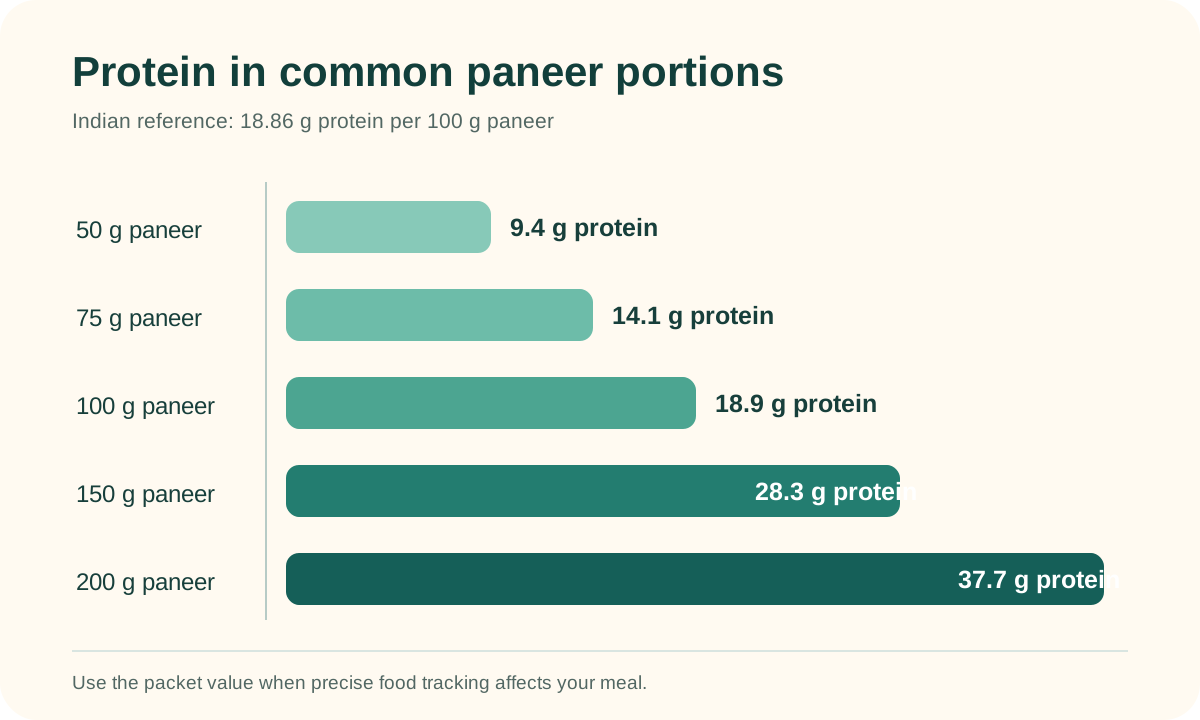
Paneer protein increases as the portion becomes larger. The table shows common household portions from 50 g through 200 g. It compares the national IFCT reference with Amul Fresh Paneer. Use the column matching your source, then check your packet. Product labels remain the strongest choice for exact meal calculations.
| Paneer portion | IFCT reference, 18.86 g per 100 g | Amul label, 20 g per 100 g |
|---|---|---|
| 50 g | 9.4 g | 10 g |
| 75 g | 14.1 g | 15 g |
| 100 g | 18.9 g | 20 g |
| 150 g | 28.3 g | 30 g |
| 200 g | 37.7 g | 40 g |
Each result covers paneer alone before gravy or toppings. Added peas, curd, nuts, or grains need separate calculations. The difference grows as the serving becomes larger. A 200 g portion differs about 2.3 g between both references.
That difference rarely changes an ordinary meal estimate greatly. Precise tracking still calls for the product label.
What Does a 100 g Paneer Portion Look Like?
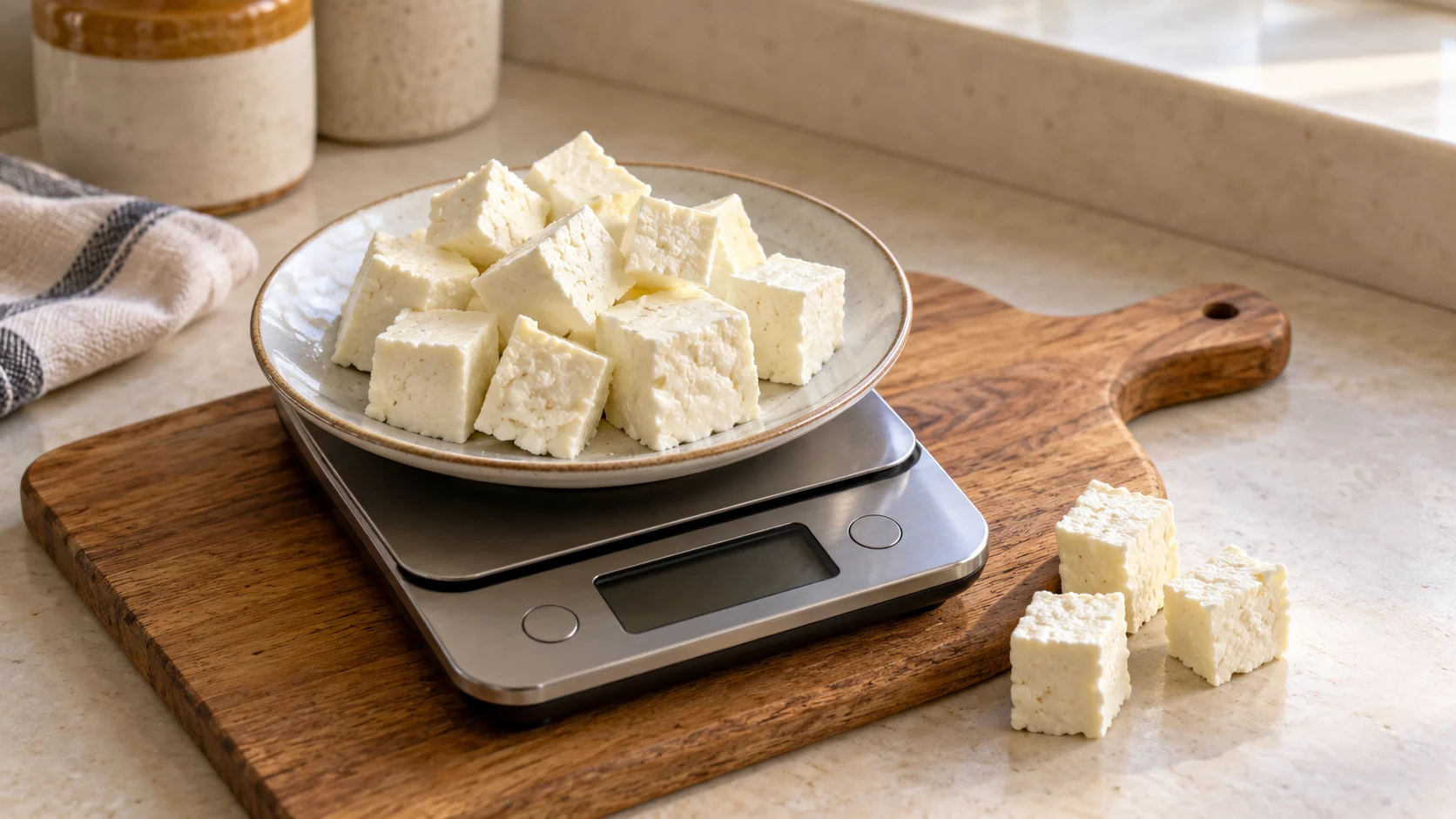
A kitchen scale offers the strongest household portion check. Reset the display with an empty bowl first. Add paneer until the display reaches 100 g.
Package fractions can help when scales remain unavailable. Half of a 200 g block weighs 100 g. One quarter of a 400 g block matches that weight.
Uneven household cuts can weaken fraction-based estimates. Mark equal widths across the rectangular block before cutting. Cut through its full height along those marks.
Cube counts provide weaker estimates because cube sizes vary. Eight small cubes may weigh less than four broad pieces. Crumbled paneer also packs differently inside cups.
Parents can divide a fresh packet into weighed portions. Write each gram amount on its covered container. Weigh again after major changes in shape or moisture.
Why Can Two Paneer Blocks Show Different Protein Numbers?
Paneer composition changes with milk, processing, and retained water. Those factors alter how much protein occupies each 100 g.
Milk Starts Each Batch With Different Solids
Cow milk, buffalo milk, and toned milk start differently. Their fat, protein, and other milk solids affect paneer yield. A review of paneer production found wide composition differences across published samples. Milk composition, manufacturing method, whey losses, and moisture all contributed.
Those differences prevent one batch from representing every paneer block. A familiar brand can also sell several distinct variants.
Pressing Changes Water Inside the Block
Firmer pressing removes more whey and lowers retained moisture. A wetter block has more water inside every weighed portion.
An Indian dairy study tested different force and time combinations. Greater force or longer pressing produced lower moisture in those samples. Less water can concentrate nutrients within each 100 g. The result depends on the complete recipe and production process.
Product Recipes Create Another Difference
Manufacturers can adjust milk solids, fat, and processing targets. Regular and high-protein products therefore need separate label checks. One brand name cannot identify the nutrition value alone. Read the full product name, variant, and reference weight.
Does Low-Fat Paneer Have More Protein?
Some low-fat products contain more protein per 100 g. The low-fat label alone cannot prove a higher protein amount. Indian food rules define low-fat paneer through fat limits. The FSSAI paneer standard also sets a maximum moisture level.
The standard contains no fixed protein figure for every product. Manufacturers must still provide the relevant nutrition information.
Amul Fresh Paneer lists 20 g protein and 24 g fat. Both values refer to 100 g of that product. Milky Mist markets a high-protein, low-fat paneer pack. Its webpage claims 50 g protein without linking one displayed size.
That comparison covers two named products, never every category member. Another low-fat paneer may use another recipe and label.
Check calories and fat beside protein during product comparisons. Higher protein concentration never describes the whole nutrition profile.
How Should Parents Compare Paneer Packets?
Place both nutrition panels on the same weight basis. Comparing one serving against 100 g creates a false winner. Convert both values to 100 g before choosing.
Read protein beside calories, fat, saturated fat, and sodium. A higher protein number can arrive with more fat. Missing panel entries never equal zero automatically.
Check ingredients, package weight, price, and likely household use. Calculate cost per 100 g for a fair price comparison. Larger packets waste money when leftovers spoil.
Look for pasteurized milk when feeding young children. The CDC food-safety advice favors dairy made from pasteurized milk. Young children face greater harm from foodborne germs.
Choose sealed packets without swelling, damage, or leaks. Check refrigeration instructions and the use-before date. Protein numbers only help when the food remains safe.
Does Cooking Paneer Reduce Its Protein?
Normal cooking changes protein structure without removing most dietary protein.
Water changes can alter the value measured per 100 g.
Heat unfolds food proteins during cooking, a process called denaturation. A food-protein review reports that normal processing generally preserves protein food value. However, cooked paneer can lose water or absorb sauce. Equal raw and cooked weights may therefore represent different starting amounts.
Compare the same piece before drawing a cooking conclusion. Counting its raw label value offers the easiest household method.
Grilling 100 g raw paneer starts with one known portion. Its final cooked weight may fall after moisture leaves. A curry creates the opposite tracking problem for many readers. Gravy raises dish weight without making every gram paneer.
Suppose 200 g Amul paneer enters one family curry. That paneer contributes 40 g protein using its label.
Four equal servings contain 10 g paneer protein each. Other ingredients may add more protein to each plate. Avoid multiplying the curry weight against paneer nutrition data. Record the paneer entering the pan, then divide servings.
How Do You Count Protein in a Mixed Paneer Meal?
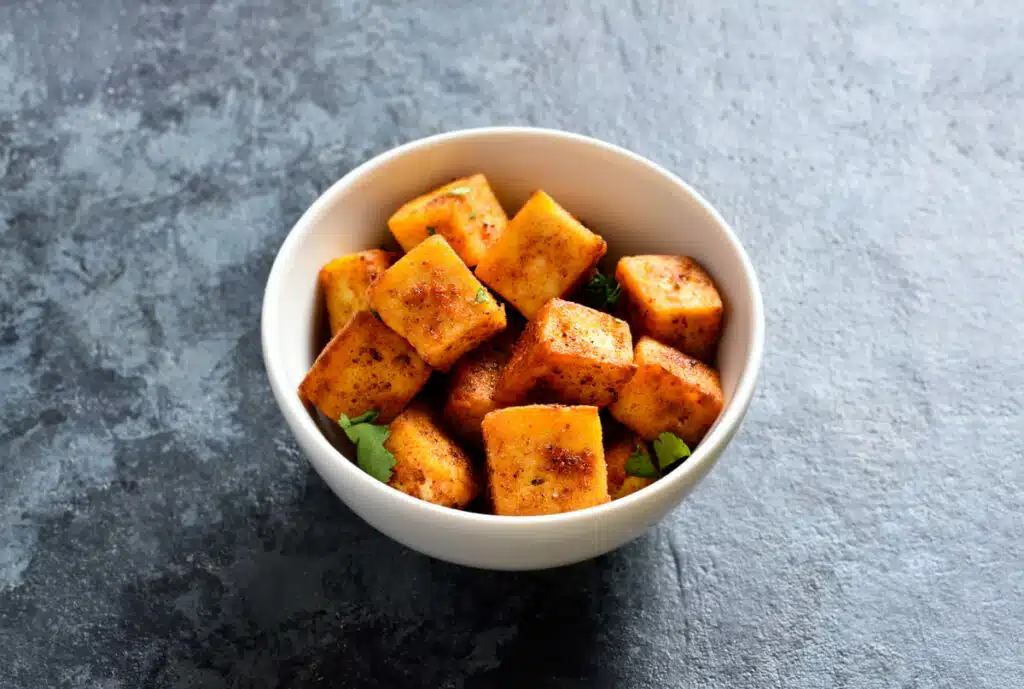
A mixed meal can contain protein from paneer, peas, curd, lentils, nuts, and grains. Count every ingredient separately, total the complete recipe, then divide that number across equal servings. Written weights make repeat family meals easier to calculate with confidence.
- List every protein ingredient: Write paneer, peas, curd, lentils, nuts, and grains before cooking begins. Calculate every ingredient using its own weight and reference.
- Calculate the paneer first: Suppose a curry contains 150 g Amul paneer. Its label provides 30 g protein from that paneer. Imagine other ingredients add another 10 g together.
- Total the complete dish: The curry then contains about 40 g protein. Four equal servings contain about 10 g each. Stir well before dividing paneer pieces and gravy.
- Recalculate changed servings: Restaurant meals rarely reveal paneer weight or full recipes. Treat restaurant protein numbers as broad estimates.
- Record repeat family recipes: Home cooking offers greater control because weights remain available. Record ingredient grams for recipes your family repeats. Round uncertain household estimates to one decimal place.
How Much Protein Does Homemade Paneer Contain?
Homemade paneer has no exact universal protein number. Milk composition, whey losses, and retained water change every batch. Using one litre of milk never reveals the final protein alone. Some protein remains in whey, while water affects final weight.
Start with the milk carton because its panel records starting protein. Next, note exactly how much milk entered the pot. After draining, weigh finished paneer without leftover whey. These three numbers support repeatable batch comparisons, although they cannot prove retained protein.
The records reveal yield changes across repeated household batches. However, they cannot measure finished protein without laboratory testing. A generic online value remains an estimate for homemade paneer. Pressing a batch longer can lower its water content. Lower water can raise protein concentration without creating extra protein.
Can You Estimate Protein From the Milk Used?
The milk panel provides a rough starting amount only. Paneer making sends some milk protein into drained whey. Starting milk protein therefore exceeds finished paneer protein.
A paneer review describes curds capturing major milk proteins during heating. Heating, acidity, and draining change the retained share. Household methods therefore produce different protein results.
Suppose one litre lists 3.2 g protein per 100 ml. The pot begins with about 32 g protein. Finished paneer contains less because whey removes some protein.
Use the same milk, method, and draining time repeatedly. Record the final block weight after every batch. Several similar batches can reveal a household pattern.
Laboratory analysis remains necessary for exact nutrition values. Home measurements cannot support a commercial nutrition label. Count whey dishes separately when used elsewhere.
Can Children Eat Paneer for Protein?
Paneer can form one part of varied family meals. Children also need grains, pulses, vegetables, fruits, and other foods. One high-protein food cannot cover every nutrient need.
- Choose an age-suitable portion: Portion needs differ across ages, growth, appetite, and health. Avoid scaling adult servings directly for small children. Pediatric advice can address growth concerns or restricted diets.
- Prepare a safe texture: Serve paneer with a soft texture suitable for development. Large firm cheese chunks can create choking hazards. The American Academy of Pediatrics lists cheese chunks among risky shapes. Mash soft paneer or cut it into developmentally suitable pieces. Seat young children upright and supervise every meal.
- Use pasteurized paneer: Choose paneer made from pasteurized milk for children under five. The CDC identifies unpasteurized dairy as a riskier choice. Refrigeration and clean utensils remain equally important.
- Check for milk allergy: Paneer contains milk proteins and cannot suit milk allergy. Read ingredient and allergen statements on every packaged variant. Never test a known milk allergy using paneer. Seek immediate medical help for emergency allergy symptoms.
- Separate allergy from intolerance: Milk allergy concerns immune reactions to milk proteins. Lactose intolerance concerns digestion of lactose. Paneer production removes some lactose within drained whey, and a review reports roughly 2.0 to 2.7 percent lactose. Individual tolerance still varies across people and portions.
- Build a varied family meal: The ICMR-NIN Dietary Guidelines 2024 presents varied food groups for children. Family meals can rotate pulses, curd, eggs, tofu, or meats. That pattern places paneer within a wider diet.
What Else Comes With Paneer Protein?
Regular paneer can contain substantial energy and fat beside protein. Review the full panel before choosing a serving.
The Indian food table lists 24.78 g fat per 100 g. It also lists 2.41 g carbohydrate and 1278 kJ energy. That energy figure converts to roughly 305 kilocalories. Rounding accounts for small differences in displayed calorie values.
Amul Fresh Paneer lists 312 kcal beside 20 g protein. Its panel also lists 24 g total fat. That panel lists 14.4 g saturated fat. Carbohydrate reaches 4 g, while calcium reaches 480 mg.
Those values belong only to Amul Fresh Paneer. Another product needs its own nutrition panel.
Protein per calorie may matter during calorie-controlled meal planning. Protein per 100 g answers a different practical question. A low-fat product can offer more protein for fewer calories. Confirm both values on the same weight basis before comparing.
Health Benefits of Paneer
Paneer offers protein and calcium alongside calories and fat. Those nutrients support different body functions within a varied diet. Benefits change with portion size, product type, and family needs.
Protein Supports Muscles and Body Tissues
Protein supplies amino acids used across muscles, skin, organs, and cells. MedlinePlus describes proteins as essential for body structure and normal functions. Paneer can add meaningful protein when vegetarian meals lack variety. One 100 g reference portion contains about 18.9 g protein.
Children need protein for normal growth, but portions vary widely. Parents should consider age, appetite, allergies, and the complete meal. Body changes also depend on total food intake and activity.
Calcium Supports Bones and Teeth
The NIH calcium fact sheet links calcium with strong bones and teeth. Calcium also supports normal muscle movement and nerve communication. Amul Fresh Paneer lists 480 mg calcium per 100 g.
That figure applies only to the named product and panel. Another paneer packet may contain a different calcium amount. Check labels when calcium intake affects a family nutrition decision.
Paneer Adds Variety to Vegetarian Meals
Paneer pairs with vegetables, grains, pulses, and familiar Indian dishes. Families can use it across curries, wraps, sandwiches, and rice. Its mild taste works with many spices and household recipes. Food variety brings nutrients that paneer cannot provide alone. Rotate paneer with dal, beans, tofu, eggs, or yogurt.
Protein Comes With Calories and Saturated Fat
Regular paneer also contains substantial calories and saturated fat. A larger serving raises protein, energy, and fat together. Choose portions after reviewing the complete meal and nutrition panel. Milk allergy makes paneer unsuitable because it contains milk proteins. Individual lactose tolerance varies across products, portions, and people.
Comparing Paneer with Other Protein Sources
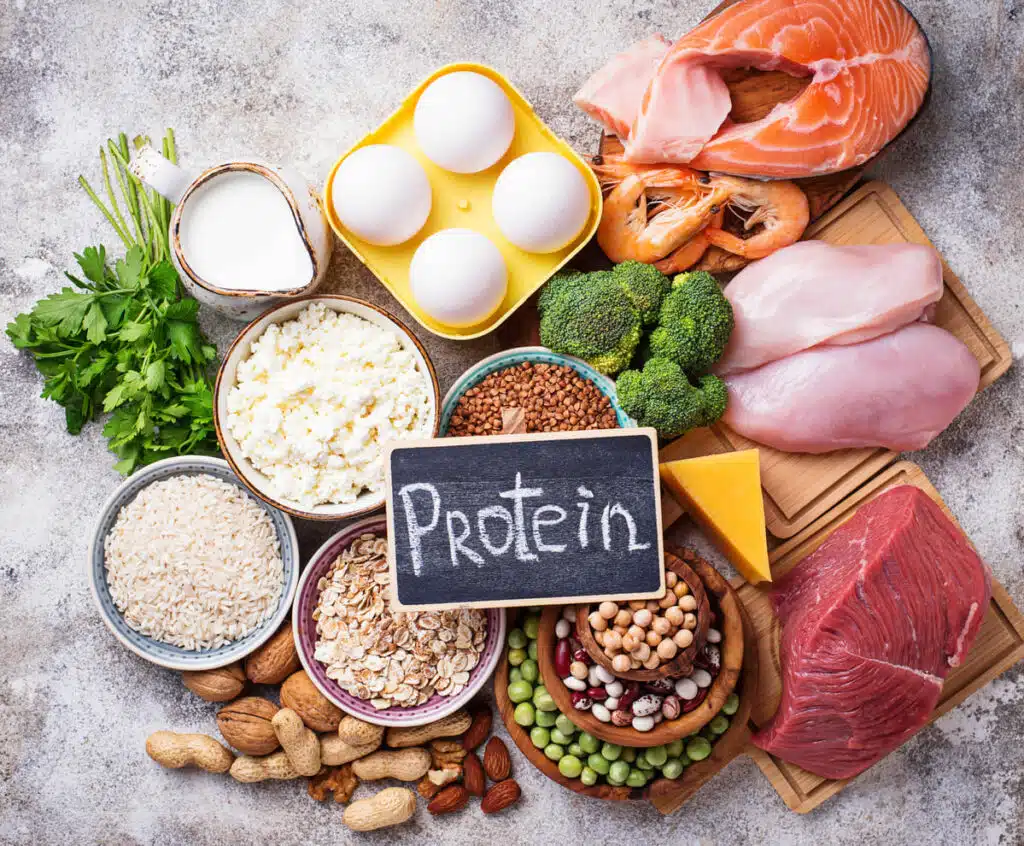
Paneer, tofu, eggs, dal, yogurt, and meat cannot be compared fairly without one shared basis. Check protein per serving, food form, calories, cost, and family needs. Matching cooked foods and practical portions produces a more useful comparison for meal planning.
- Choose one comparison basis: Protein per 100 g answers a concentration question. Protein per serving supports meal planning. Protein per calorie or rupee supports energy and budget comparisons.
- Match the food form: Cooked dal contains substantial water, while dry lentils contain little. Compare cooked food with cooked food, then match edible portions and practical serving sizes.
- Check the product type: Tofu varies across silken, firm, and concentrated products. Yogurt changes across regular, strained, and flavored varieties. Cheese differs across styles and moisture levels.
- State serving details: Egg comparisons need a stated size or gram weight. Meat comparisons need cut and cooking details. Labels provide stronger answers for packaged foods.
- Consider the whole family decision: Milk allergy removes paneer from the comparison. Budget, taste, availability, and dietary pattern can reshape choices. Use the basis matching your family question.
How Much Daily Protein Can Paneer Provide?
Paneer can provide a meaningful share of daily protein.
Your total requirement depends on body weight and individual circumstances.
The ICMR-NIN nutrient requirements brief lists 0.83 g protein per kilogram daily. That allowance covers healthy Indian adults eating adequate-quality protein. A 60 kg adult example produces 49.8 g daily. Calculate 60 kg times 0.83 g per kilogram.
One 100 g IFCT paneer portion supplies about 38 percent. Amul Fresh Paneer supplies about 40 percent in that example.
Those percentages illustrate arithmetic, without prescribing a personal meal. Pregnancy, lactation, age, health, and diet quality can change needs. Athletic goals can also involve a different nutrition plan. A qualified dietitian can assess an individual target when needed.
Paneer never needs to provide the entire daily amount. Pulses, milk, curd, eggs, soy foods, grains, and other foods contribute.
When Does Paneer Protein Need Professional Advice?
Packet labels can support ordinary meal estimates, but some health needs require personal advice. Kidney disease, pregnancy, breastfeeding, athletic training, child growth concerns, restricted diets, or allergy symptoms can change the safest protein choice and serving amount for one person.
- Kidney disease: Individual protein recommendations can change substantially. Ask a qualified professional before using general meal estimates.
- Pregnancy, breastfeeding, or athletic training: Protein needs can change with each situation. A dietitian can assess total food intake and medical context. Bring the paneer packet during that discussion.
- Child growth or feeding concerns: Parents should discuss problems affecting growth or food variety. Very narrow diets can miss nutrients beyond protein. Paneer alone cannot correct every dietary shortage.
- Possible severe allergy: Seek urgent help after breathing trouble, facial swelling, or collapse. Meal calculations should never postpone emergency treatment.
- Before a consultation: Record the product, portion, timing, and symptoms. Mention supplements and other major protein foods. Accurate details support a more useful assessment.
Can Paneer Protein Guarantee Weight Loss or Muscle Gain?
Paneer protein cannot guarantee weight loss or muscle gain. Whole-diet energy, activity, training, and health context affect those outcomes. Protein contributes amino acids used throughout the body. One paneer serving cannot predict a body-weight or muscle change.
Regular paneer may add substantial calories and saturated fat. Portion choice therefore belongs beside protein counting.
For weight management, count the entire finished meal. Oil, cream, butter, nuts, rice, and bread can change energy greatly. For protein planning, compare foods on matching bases. Raw dry lentils and cooked dal cannot support a fair 100 g comparison.
Tofu also varies across silken, firm, and high-protein products. Eggs have different serving weights from paneer blocks.
Choose the comparison basis before naming a preferred food. Useful bases include protein per serving, calorie, cost, or dietary need. Start with the packet when calculating paneer protein precisely. Use 18.86 g per 100 g only as a general reference.
How Were the Paneer Numbers Checked?
The main generic answer comes from the official Indian food tables. Named product figures come directly from manufacturer pages. Every product claim remains limited to its named packet.
The portion table uses one visible calculation method. Each serving value starts with a supported per-100-g figure. Rounded results retain enough detail for family meal planning.
The FSSAI standard supports moisture and fat-category statements. Dairy research supports explanations concerning milk, whey, and retained water. General protein research supports the bounded cooking explanation.
Child-safety statements use CDC and pediatric sources. Daily protein context uses the ICMR-NIN requirements brief. None of those sources creates one universal paneer value.
Use the physical packet for every precise product calculation. Formulas and ingredients can change after online pages appear. Recheck the current panel before making precise calculations.
Conclusion: How Much Protein Does Paneer Provide?
Use 18.86 g protein per 100 g as a general Indian reference. Rounding it to 18.9 g or 19 g works for family meal estimates. A product label remains the best source when you know the exact paneer brand and variant.
Weigh paneer before cooking, calculate its protein from the stated reference weight, and divide the complete dish across servings. Review calories, fat, allergens, and the rest of the meal beside protein. Individual health needs deserve advice from a qualified professional.
Sources
- ICMR-NIN, Indian Food Composition Tables 2017
- Dudhsagar Dairy, Amul Fresh Paneer nutrition panel
- Milky Mist, paneer product range
- ICMR-NIN, Nutrient Requirements for Indians brief
- Paneer production review
- Indian Journal of Dairy Science, paneer pressing study
- FSSAI, Standard for Chhana and Paneer
- Food protein processing and denaturation review
- Paneer, an Indian soft cheese variant: a review
- CDC, safer food choices for children under five
- American Academy of Pediatrics, choking prevention
- ICMR-NIN, Dietary Guidelines for Indians 2024
- NIH Office of Dietary Supplements, Calcium Fact Sheet for Consumers
- MedlinePlus Genetics, protein structure and body functions