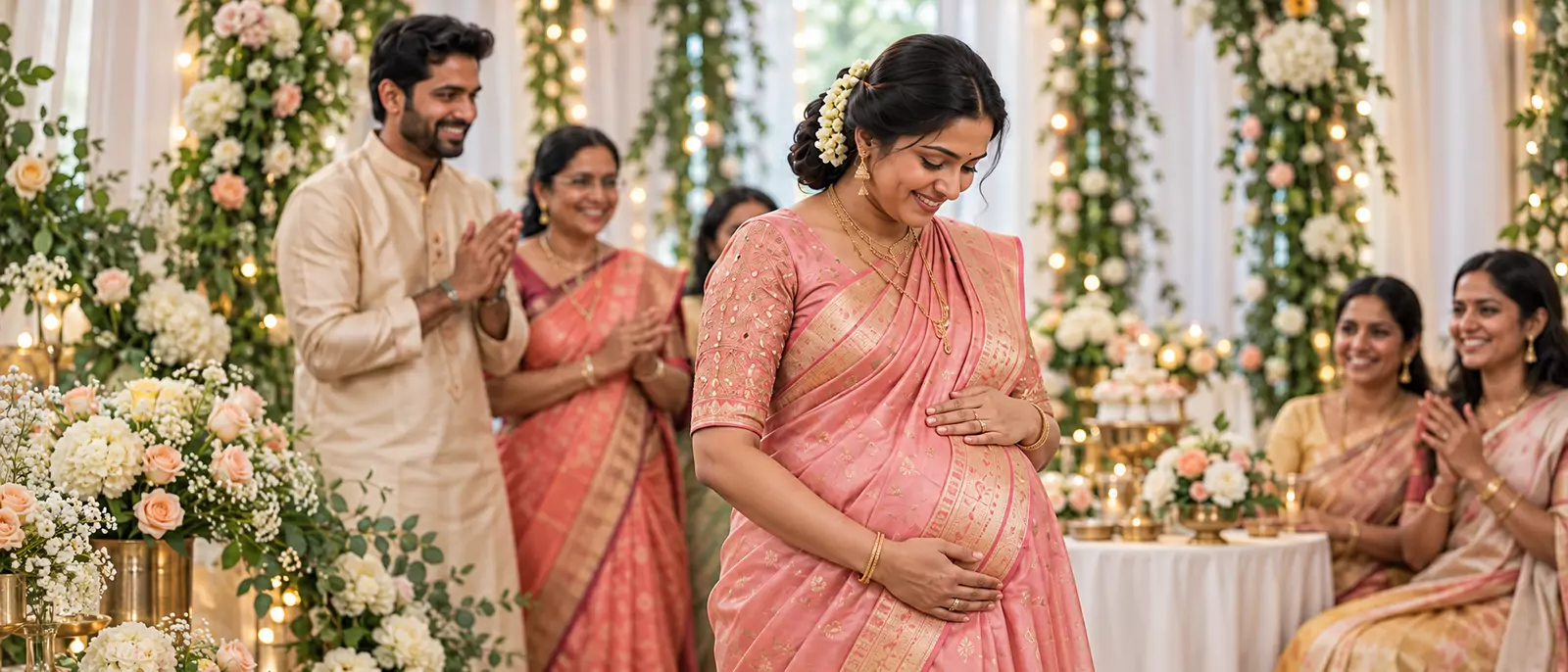

Natural, meaningful photo ideas for solo portraits, couples, family, and friends.
Parenthood fills life with a thousand beautiful moments.
In this guide
The best baby shower poses need only four small choices. Turn the body, place the hands, choose a gaze, then add connection. Start with essential portraits while energy and outfits remain fresh.
Use every pose as a prompt, never a rigid instruction.
Key Takeaways
Begin solo portraits while clothing, decorations, and energy remain fresh.
Vary body angle, hands, gaze, and connection before changing locations.
Photograph partners, children, elders, and close friends before larger groups.
Request permission before touching, clothing adjustments, or ritual photographs.
Capture wide, medium, and close frames for every important relationship.
Treat the shot list as coverage support, never a rigid schedule.
The four-choice method
Every strong pose combines body angle, hands, gaze, and connection. Change one choice whenever a photograph looks repetitive. This approach creates variety without extra props, locations, or tiring movements.
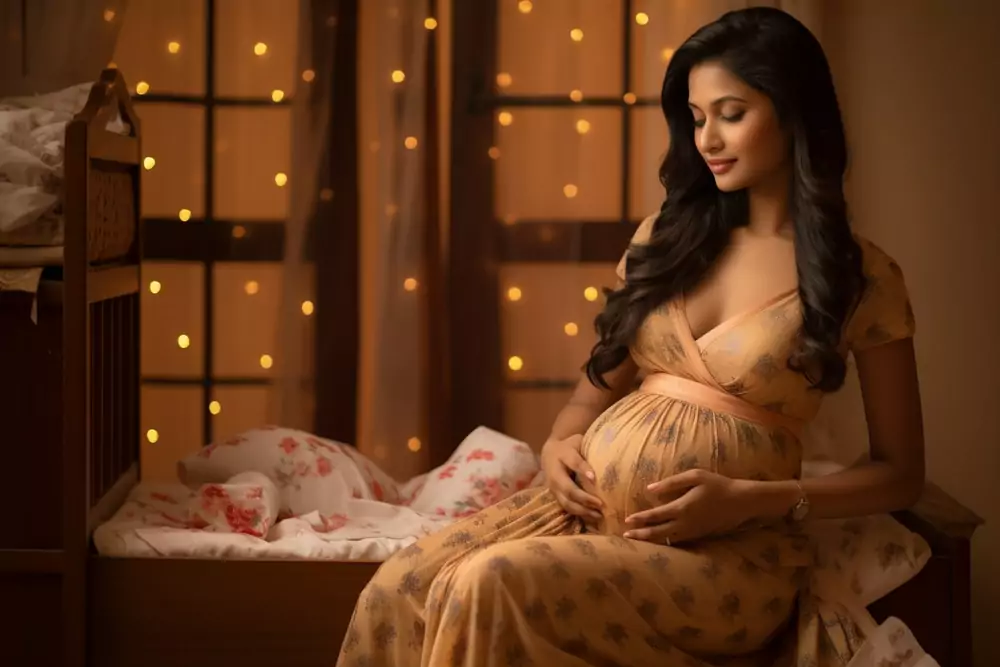
Face forward, turn slightly, or use a clean side profile.
Frame the bump, hold flowers, or let one hand relax.
Meet the lens, look down, or turn toward someone nearby.
Pose solo, with a partner, family, or close friends.
Choose the first pose for each group
Match the people present with one practical starting setup.
| People or place | Starting pose | Useful adjustment | Watch for |
|---|---|---|---|
| Solo portrait | Three-quarter standing portrait | Change hands and gaze | Raised shoulders |
| Saree portrait | Over-the-shoulder profile | Arrange the pallu first | Loose fabric |
| Couple | Shoulder-to-shoulder frame | Join inside hands | Hidden faces |
| Friends | Shallow semicircle | Stagger face heights | Crowding |
| Family | Triangle or two layers | Seat elders centrally | Long straight lines |
| At home | Seated window portrait | Use one plain wall | Harsh ceiling light |
Choose the people before choosing every pose
Write four short groups before the celebration starts: parent-to-be, partner, immediate family, and closest friends. Add grandparents, children, or chosen elders to the group where they feel most comfortable. This simple order prevents important people from leaving before their portrait is complete.
Begin with the smallest groups while clothing and energy remain fresh. Move toward larger groups only after those frames are safe. Tell the photographer which ceremony moments cannot be repeated. Also identify any person who does not want to appear online. These decisions protect the gallery better than a long list of decorative poses.
Follow a 15-photo must-capture shot list
Complete these photographs early, while outfits remain fresh and important guests remain nearby. Work down the list calmly, but pause whenever a meaningful candid moment appears.
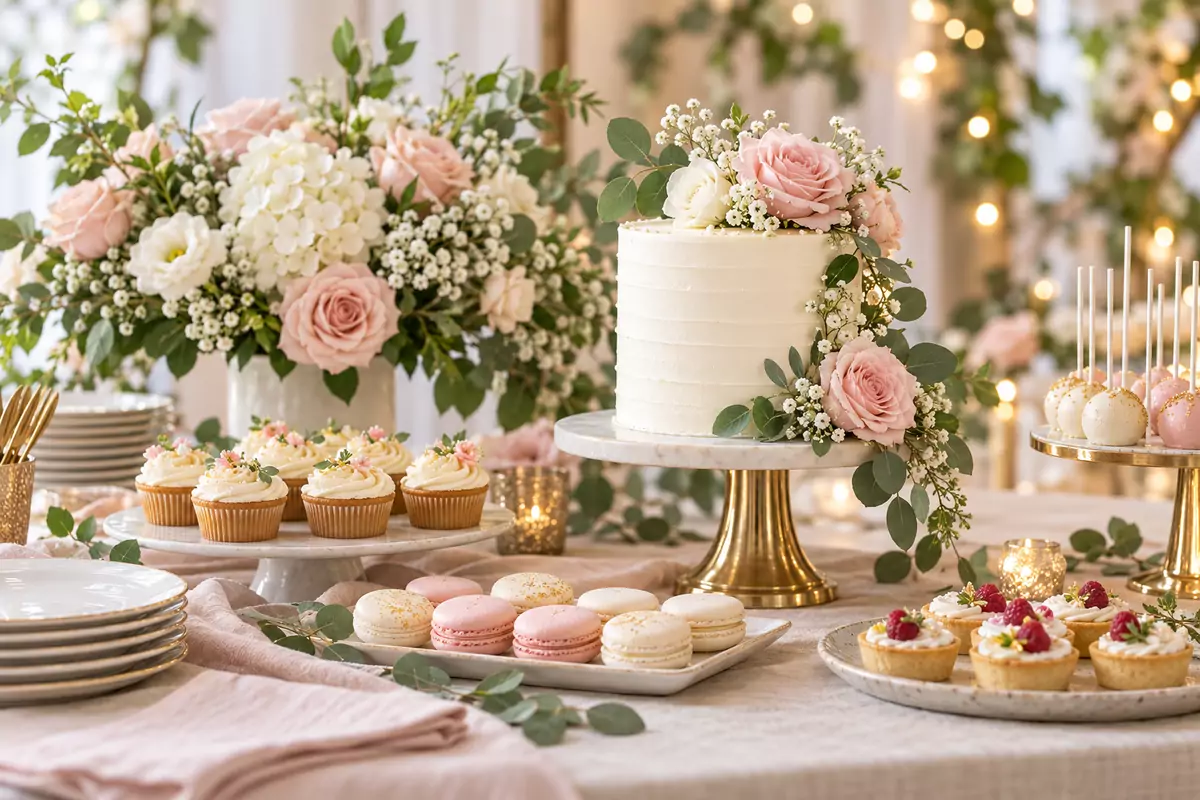
Decorated room
Photograph the complete space before guests arrive.
Full-length solo
Include the outfit edges, footwear, and relaxed posture.
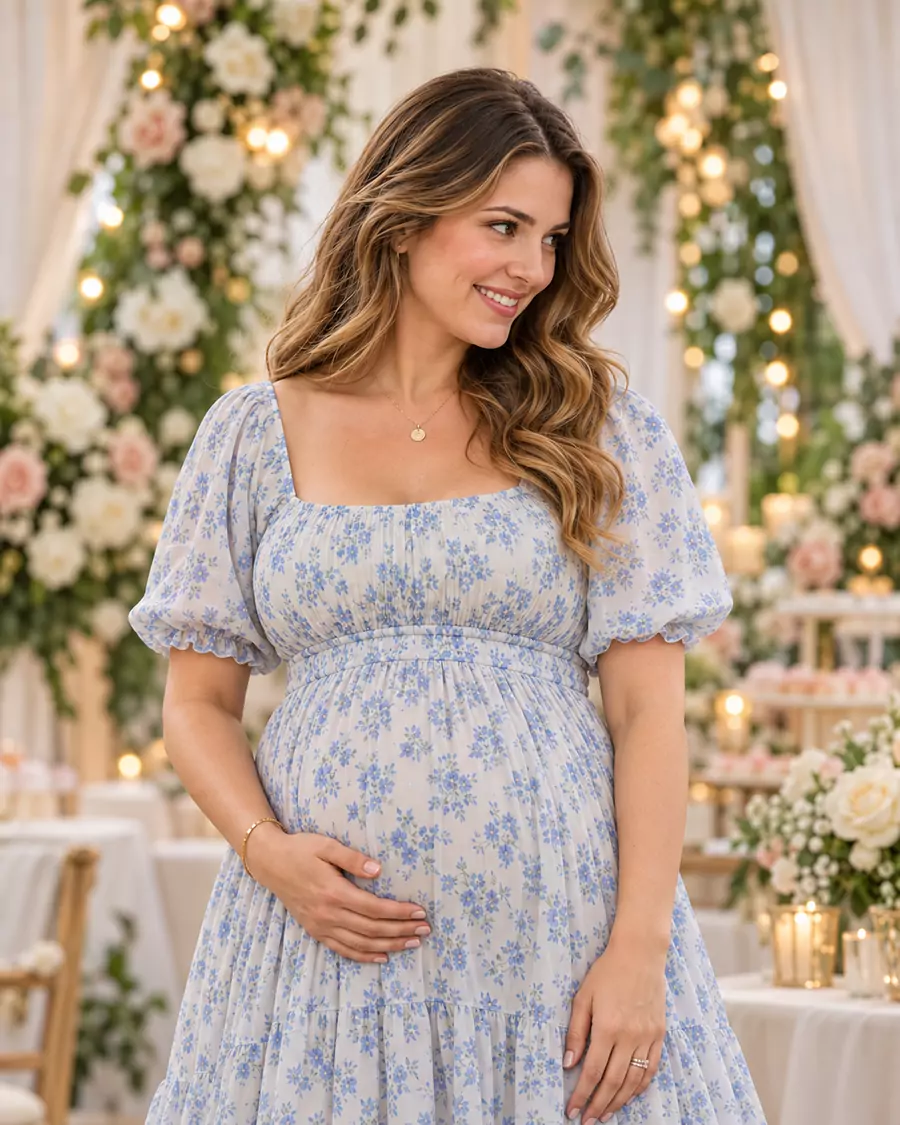
Close solo portrait
Frame genuine expression with comfortable shoulder space.
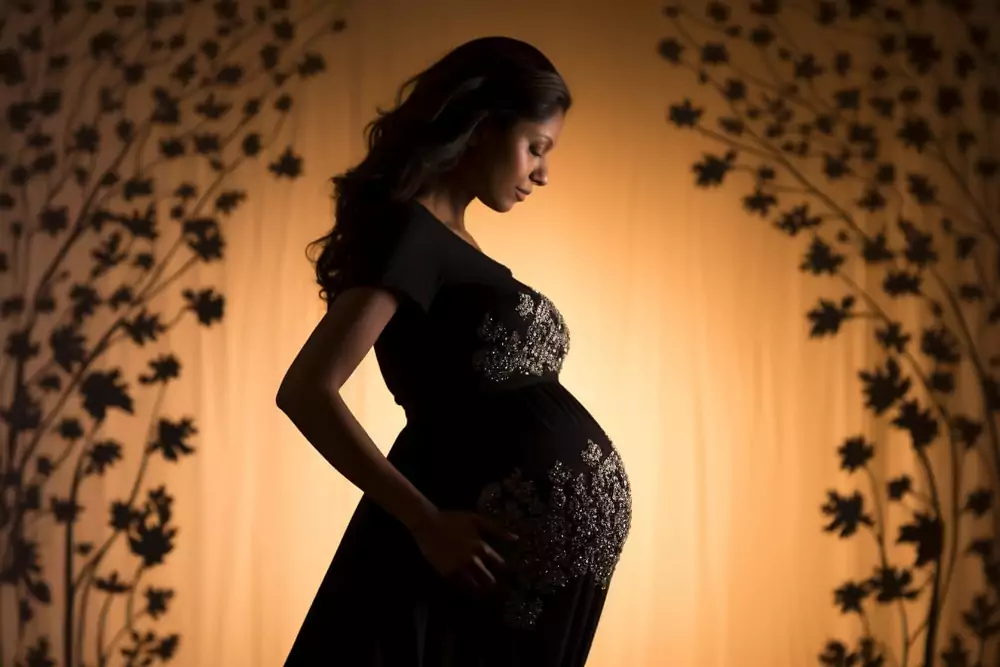
Profile silhouette
Separate the face, hands, and bump from the background.
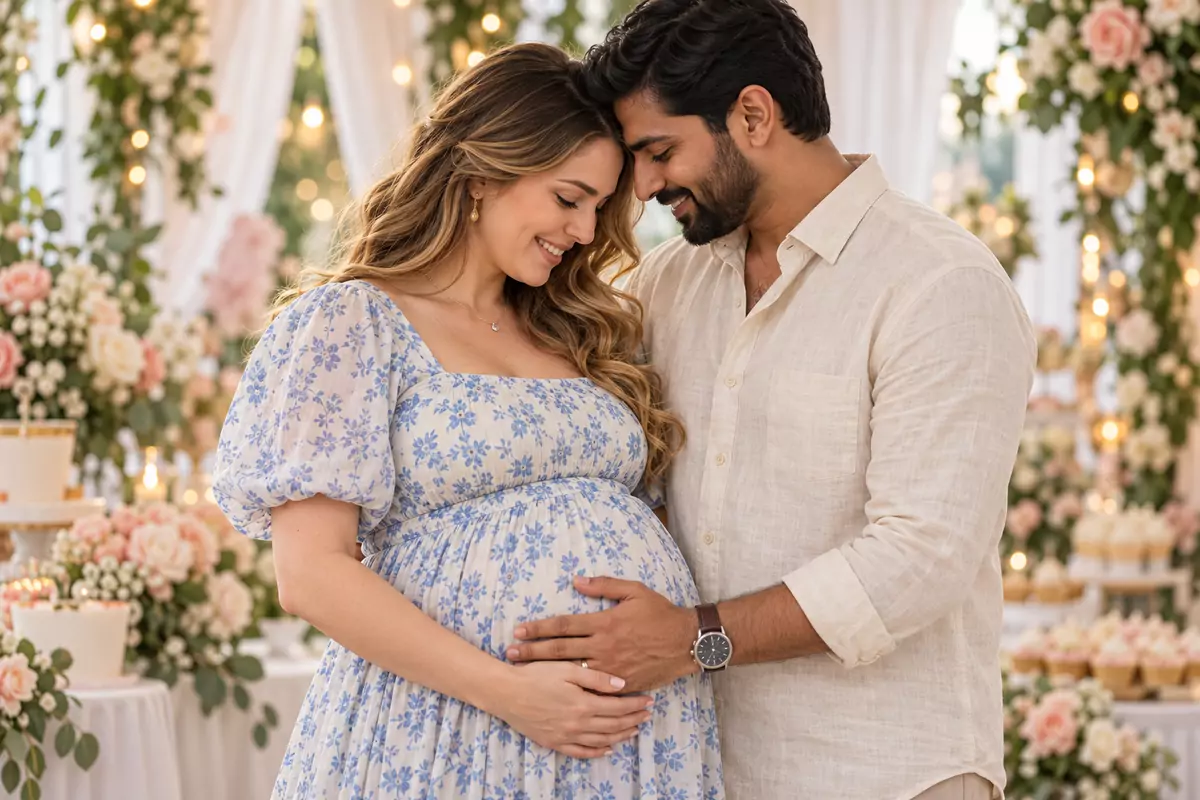
Partner portrait
Capture the camera gaze, shared gaze, then conversation.
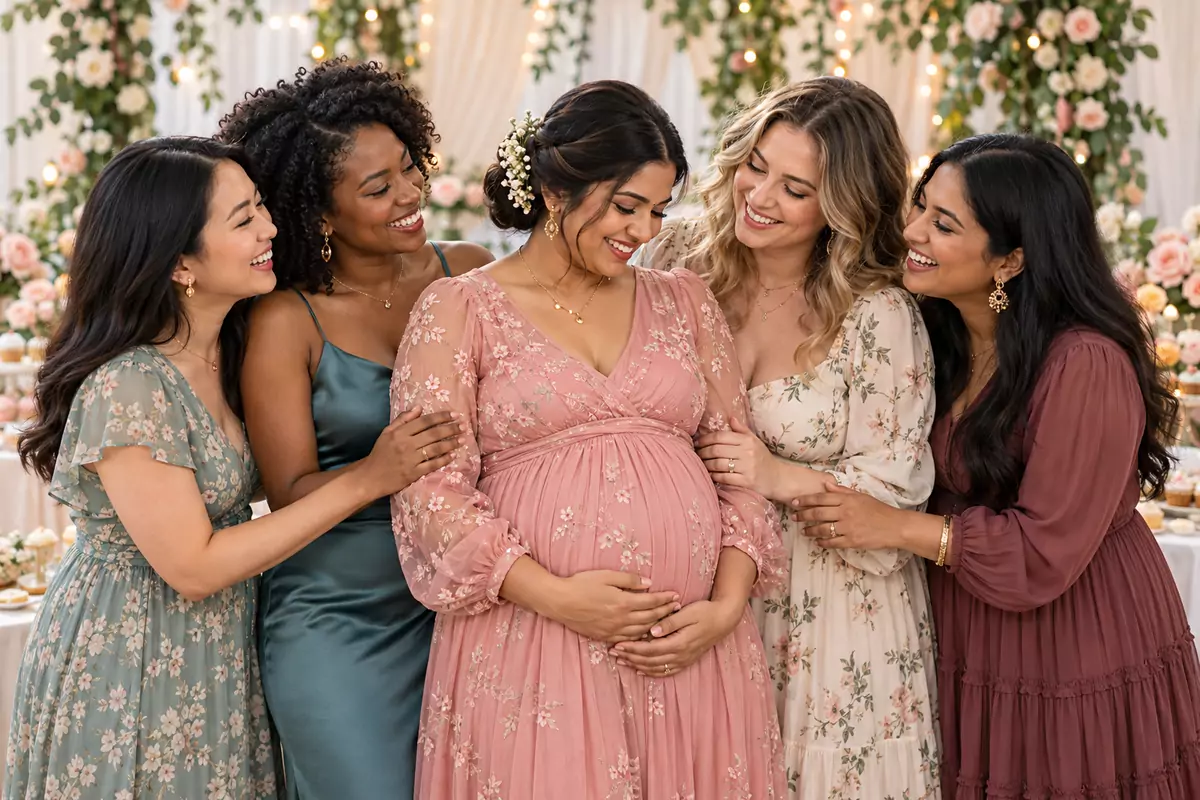
Friends together
Start with one composed frame, then invite natural conversation.
Immediate family
Use two layers and keep every face visible.
Grandparents and elders
Make the full group before smaller combinations.
Closest friends
Start composed, then invite conversation and laughter.
Guest arrival
Preselect an angle showing the greeting and reaction.
Ceremony or blessing
Confirm boundaries before recording ritual details.
Gift reaction
Include the giver, receiver, and meaningful object.
Cake or food
Record the untouched display before serving begins.
Small details
Pair each detail with a wider context frame.
Closing portrait
Finish quietly among opened gifts or remaining flowers.
Change hands and gaze before changing locations
Small adjustments create fresh-looking photographs without another backdrop. Complete these variations after the first standing portrait.
- 1
Classic cradle: Place one hand above and another beneath the bump.
- 2
Flower near the hip: Hold one flower while the free hand rests low.
- 3
Low hand frame: Bring both hands beneath the bump and relax both elbows.
- 4
Camera gaze: Meet the camera for one confident, still portrait.
- 5
Downward gaze: Look toward the nearest hand without tucking the chin.
- 6
Shared smile: Turn toward someone nearby and let their expression lead.
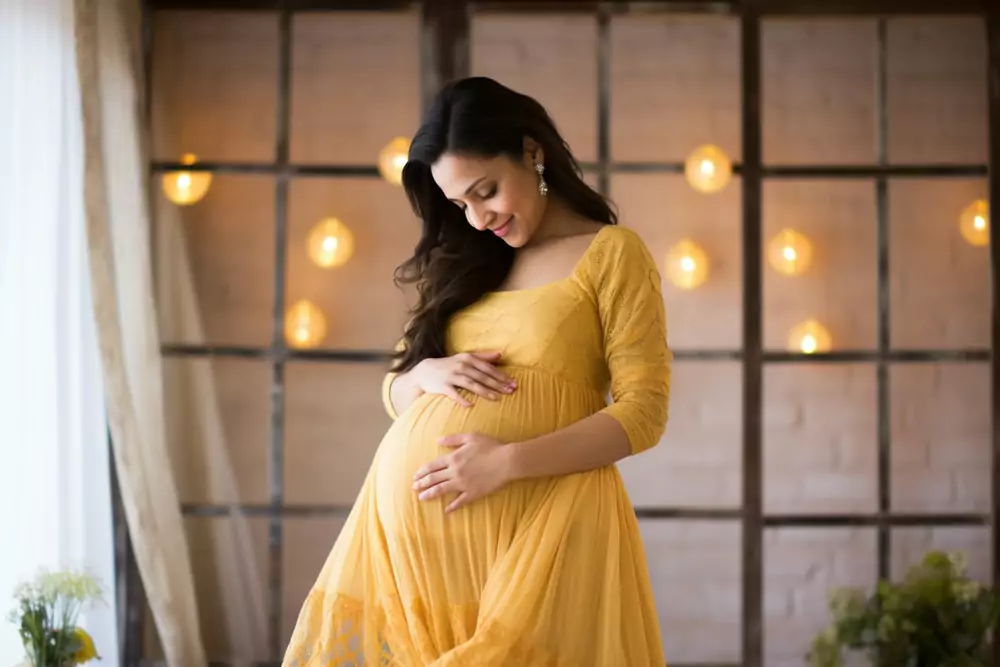
Start with 15 dependable solo baby shower poses
Photograph each solo setup both full-length and waist-up when space allows. Complete saree or gown portraits before the room becomes busy.
Three-quarter standing portrait
Turn halfway from the camera, soften the front knee, and frame the bump.
Side-profile silhouette
Stand beside a bright window and keep the chin level.
Seated window portrait
Angle the knees away while turning shoulders toward the camera.
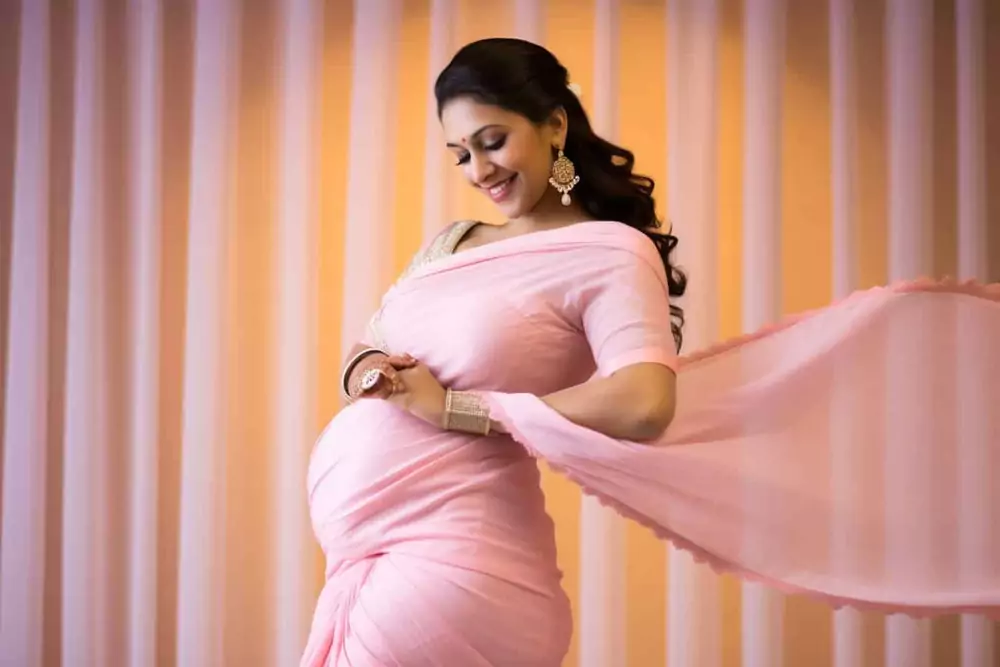
Over-the-shoulder saree portrait
Arrange the pallu first, then look back toward the lens.
Walking toward the celebration
Use small steps on a clear, level path.
Classic hand cradle
Place one hand above and one below the bump, then relax the elbows.
Both hands below
Support the lower curve gently and turn the shoulders slightly away.
Downward gaze
Look toward the nearest hand without dropping the chin tightly.
Direct camera gaze
Face the lens for one confident portrait with level shoulders.
Flower beside the hip
Hold one bloom low while the free hand frames the bump.
Seated side angle
Turn the knees away and rotate the shoulders gently toward the camera.
Doorway frame
Stand just inside a doorway and use its clean lines around the body.
Saree or gown movement
Lift only the safe outer edge while keeping both feet clearly visible.
Face-and-bump close-up
Crop above the waist while leaving comfortable space around the hands.
Backlit outline
Turn sideways near a bright curtain so the profile remains easy to read.
For a saree portrait, arrange the pallu before changing the body angle. Keep loose fabric away from the feet while walking or turning. Photograph vertical and horizontal frames before moving the drape again. A sturdy chair near soft window light also gives the parent-to-be a useful break between standing photographs.
Use 12 comfortable baby shower poses for couples
Couple portraits work best when neither person disappears behind another. Begin shoulder-to-shoulder, then move into closer frames.
Shoulder-to-shoulder
Touch inside shoulders and join the inside hands near the bump.
Partner embrace
Stand slightly behind while keeping both faces visible.
Forehead-to-forehead
Offset noses, close the eyes, then share a private joke.
Walking together
Link hands and talk during one short, comfortable pass.
Seated connection
Use a firm chair and keep the bump outline clear.
Meaningful baby item
Hold one keepsake without letting it replace the faces.
Hands together on the bump
Layer the partner’s hands lightly without covering the complete shape.
Shared side gaze
Stand side by side and look toward the same person or detail.
Talking to the baby
Let the partner speak naturally while the parent-to-be watches the reaction.
Soft back-to-back turn
Touch shoulders lightly, then turn both faces toward one another.
Slow dance sway
Use one small side-to-side movement instead of a full turn.
Couple blessing portrait
Pause together after a ritual so the emotion remains genuine.
Photo direction: Capture one wide frame, one medium frame, and one close frame before switching poses. This short sequence protects useful variety when celebration time becomes limited. Skip repeated walking whenever tiredness or balance concerns appear.
Build 20 family and friend poses in layered shapes
Use visible faces, varied heights, and personal space. Request permission before planning any belly-touch photograph.
Shallow semicircle
Turn outside shoulders inward and keep personal space.
Seated center
Place taller friends behind and shorter friends alongside.
Immediate family triangle
Keep the parent-to-be central with children slightly forward.
Grandparents beside the parents
Angle every body gently toward the middle.
Sibling conversation
Let a child speak, read, or sing near the bump.
Family blessing
Document the real ceremony without interrupting its order.
Parents on both sides
Place one parent on each side and join the inside shoulders.
Sisters and cousins
Build a close arc, then ask everyone to look toward the parent-to-be.
Friends laughing together
Start with a composed frame before inviting one shared story.
Hands-in connection
Bring consenting hands toward the centre without crowding the bump.
Two-row extended family
Seat the front row and stagger every standing face behind it.
Parent-to-be with mother
Stand close enough for joined hands and an easy shared gaze.
Parent-to-be with father
Use a side embrace or linked arm while keeping both faces clear.
Portrait with in-laws
Keep the arrangement balanced and give each person equal visual space.
Children in the front row
Photograph at their height and let interaction happen before posing.
Elders seated centrally
Bring younger relatives alongside rather than asking elders to stand longer.
Friends walking in
Use one short, clear path and let the conversation continue naturally.
Three-generation portrait
Stagger heights so every face remains visible without a rigid line.
Ritual participants together
Photograph the people involved only after confirming the ceremony order.
Everybody wide frame
Finish with one complete group that includes the setting and decorations.
Regional celebrations may include godh bharai, dohale jevan, seemantham, or valaikappu. Ask the family to identify sacred moments and photography boundaries beforehand. For larger groups, build two rows instead of one long line. Seat elders near the center, stagger face heights, and leave enough room for every person to stand comfortably.
Capture 10 celebration poses that cannot be repeated
Secure the essential people first, then let the celebration lead. Assign one photographer to watch reactions while another handles group portraits.
Arrival
Show enough decoration to establish the celebration.
Greeting embrace
Photograph the approach, hug, and expression immediately afterward.
Meaningful gift
Keep photographing through the first shared conversation.
Dessert interaction
Capture the display, serving, then nearby reactions.
Advice cards
Protect private messages unless each writer approves.
Blessing reaction
Keep the giver and receiver visible without interrupting the ritual.
Unplanned laughter
Stay on the expression for one extra frame after the joke ends.
Partner reaction
Turn briefly from the main action to record the partner watching.
Hands with a keepsake
Pair the close detail with a wider frame showing who holds it.
End-of-party portrait
Use the quieter room to close the visual story.
Finish with six simple baby shower poses at home
Baby shower poses at home need one uncluttered area and soft light. Clean the phone lens before taking portraits. Face the subject toward a large window, then switch off harsh ceiling lights when daylight provides enough brightness. Use the main camera instead of digital zoom. Step closer while leaving comfortable personal space.
Hold the phone level near chest height for standing portraits. Tap the face to set focus and brightness. Take one normal frame and another wider backup. Portrait mode can blur decorations, hair, or hands incorrectly, so check those edges before trusting the effect.
Avoid placing bright windows directly behind group faces. A side window creates gentle shape while preserving expressions. For evening celebrations, place one soft lamp near the photographer. Mixing orange and white lights can create uneven skin colour that becomes difficult to correct later.
Window-light standing pose
Turn slightly toward the window and keep the background uncluttered.
Sofa corner portrait
Sit near the firm edge, angle the knees, and support the lower back.
Doorway side profile
Use the doorway as a frame while keeping the floor path clear.
Sturdy-chair portrait
Turn the chair slightly and photograph both hands and the complete outfit.
Plain-wall shadow
Place one soft lamp to the side for a simple profile outline.
Family sofa portrait
Seat the parent-to-be comfortably and bring family members alongside.
Comfort decides the pace
Offer a sturdy chair, water, and short breaks. Stop every setup when pain, dizziness, breathlessness, or discomfort appears.
Consent comes before the frame
Ask before touching clothing, hair, or bodies. Belly-touch pictures also require direct permission from the parent-to-be.
Taking photos at home?
Face the subject toward a large window, switch off harsh ceiling lights, and use the main phone camera instead of digital zoom.
Later pregnancy can make long, flat-back positions uncomfortable. The NHS advises avoiding extended flat-back exercise after sixteen weeks. ACOG also cautions against prolonged flat-back positions during pregnancy. A photo session differs from exercise, yet comfortable upright positions remain preferable. Personal maternity advice from a clinician takes priority.
Understand baby shower photography costs
Families often search for poses before they know how much photography coverage they need. The useful question is not simply, “What does a photographer charge?” It is, “Which parts of this celebration do we want photographed, and what will we actually receive?” A one-hour portrait session, three-hour baby shower, and full photo-and-video team are different services even when every listing uses the word “package.”
Current advertised maternity packages from Indian studios provide a practical reference point. Short sessions commonly begin around ₹8,000–₹11,000, while multi-look sessions often sit around ₹13,000–₹25,000. Premium packages with longer coverage, makeup, albums, reels, or combined newborn sessions can cost ₹28,000 or more. Baby shower event coverage may be priced differently, so treat these figures as planning ranges rather than a quotation.
Choose coverage by the event flow
A 60–90 minute booking can work when the goal is a calm portrait session before guests arrive. It should cover the parent-to-be, partner, children, and immediate family, but it leaves little room for delayed relatives or ceremony photographs. Two to three hours is more realistic when you want arrivals, blessings, group portraits, gifts, food, and candid reactions. Longer coverage makes sense only when there are multiple ceremonies, a venue change, or video requirements.
Share the event timeline before requesting a quote. Mark the planned start of the ceremony, the safest time for formal portraits, and any moment the photographer must not interrupt. Then add a short buffer for late guests. This helps the photographer recommend hours honestly and prevents the family from paying for idle setup time or losing coverage before the most important ritual begins.
Build a realistic photography budget
Compare the complete deliverables, not only the headline price. Prices vary by city, date, travel, and photographer.
| Coverage level | Planning range | Usually suitable for | Confirm before paying |
|---|---|---|---|
| DIY with a phone | ₹0–₹3,000 | Small home celebration with a confident relative taking photographs | Tripod, storage space, lighting, backup phone, and who stays behind the camera |
| Short professional session | About ₹8,000–₹11,000 | Solo, couple, and immediate-family portraits before guests arrive | Session length, edited-photo count, outfit changes, and family inclusion |
| Extended portrait package | About ₹13,000–₹25,000 | Multiple looks, studio or outdoor portraits, partner and sibling photographs | Gowns, props, makeup, travel, location fees, and delivery time |
| Premium or combined coverage | ₹28,000 and above | Longer sessions, albums, reels, film, or maternity-plus-newborn packages | Video length, album specifications, usage rights, cancellation terms, and taxes |
A lower quote is not automatically poor value, and a larger package is not automatically better. Count how many edited photographs you will receive and whether the photographer can handle a busy family function, not only a controlled studio. Event coverage requires quick group organisation, low-light experience, and attention to ceremonies that cannot be repeated.
Ask how many hours are included
Confirm when coverage starts: during getting ready, before guests arrive, or at the formal ceremony.
Ask what “edited images” means
Colour correction for a full gallery is different from detailed retouching on a small selection.
Check who is included
Some portrait packages include a partner and children but charge extra for grandparents, relatives, or pets.
Confirm the delivery method and date
Ask whether files are full resolution, suitable for printing, and available through a downloadable gallery.
Discuss privacy in writing
If the family does not want images used on social media or in a portfolio, include that condition in the agreement.
Keep a cancellation plan
Pregnancy, weather, and family circumstances can change. Understand rescheduling and refund terms before paying an advance.
Practical booking rule: choose the smallest package that covers the irreplaceable parts of the day. Spend first on enough time, dependable coverage, and clear delivery terms. Add albums, props, extra outfits, or reels only when those items genuinely matter to the family.
Secure the people first, then follow the celebration
Strong baby shower photography needs fewer poses than most lists suggest. Start with the parent-to-be, partner, children, elders, and closest friends. After those portraits, photograph greetings, blessings, gifts, laughter, food, and small details.
Let comfort decide how long every setup lasts. The four-choice method prevents repeated pictures without adding tiring movements. Small adjustments create useful variety while preserving natural expressions.