



First, a quick definition of each
Dry skin means the outer layer of skin is short on water and oils. In babies, it often shows up after too many baths, in cold or dry weather, or with heated indoor air. It’s usually mild and temporary.
Eczema (the most common type in babies is atopic dermatitis) is a long-term skin condition. According to the American Academy of Pediatrics’ guide to eczema in babies and children, up to 1 in 4 children have it. The AAP explains that it’s linked to a weaker skin barrier: the skin has a harder time holding in water and keeping out irritants. Eczema tends to flare up, calm down and flare again.
Here’s the tricky part: dry skin is a hallmark of eczema. Babies with eczema almost always have dry skin, but most babies with dry skin don’t have eczema.
What normal dry baby skin usually looks like
Not every flake is a problem. A few common, harmless patterns:
- Newborn peeling. The AAP notes that whether a baby is born early, late or on time, peeling skin is normal and usually needs nothing special. Cleveland Clinic explains that this peeling phase typically happens in the first couple of weeks and is often most noticeable on the arms and legs, and that babies born after their due date tend to peel more.
- Seasonal dryness. Rough, slightly flaky skin on the legs, arms or hands in cold weather or with the heat running.
- Bath-related dryness. Skin that looks a bit dull or tight after baths, especially long or hot ones.
Ordinary dry skin usually isn’t very itchy, doesn’t look inflamed, and tends to look better once you shorten baths and moisturize regularly.

What baby eczema usually looks like
Eczema tends to go beyond simple dryness. Signs described by the American Academy of Dermatology (AAD), the AAP and the National Eczema Association (NEA) include:
- Itch. The AAD calls eczema “the itch that rashes”: it often starts with very itchy skin, and scratching or rubbing brings out the rash. Babies can’t tell you they itch, so watch for rubbing their face against your shoulder or the crib sheet, squirming, or extra fussiness, especially at night.
- Location by age. The AAP says that in babies, eczema usually starts on the scalp and face, with red, dry patches on the cheeks, forehead and around the mouth. The NEA adds that between about 6 and 12 months it often shows up on the elbows and knees, places that get rubbed while crawling.
- Usually not the diaper area. Both the AAP and the NEA note that eczema doesn’t usually develop in the diaper area, where moisture protects the skin. A rash there is more often diaper rash.
- Color differs by skin tone. On lighter skin, eczema often looks red or pink. The AAD notes that on darker skin it may look dark brown, purple or grayish, and small rough bumps are more common. So “it isn’t red” doesn’t rule it out.
- Oozing or crusting during flares. Patches may weep fluid and crust over. Over time, scratching can leave skin thicker.
- It comes and goes. Eczema tends to have flares and calmer periods, often returning to the same spots.
- Family history. The NHS notes eczema is more likely if a parent has eczema or a close family member has asthma or hay fever.
Side-by-side comparison
| Comparison point | Everyday dry skin | Baby eczema (atopic dermatitis) |
|---|---|---|
| What it looks like | Flaky, rough, dull or peeling; skin not inflamed | Dry, scaly patches that look red/pink on lighter skin or brown, purple or gray on darker skin; small rough bumps; may ooze or crust (AAD, NHS) |
| Where it shows up | Arms, legs, hands; newborn peeling often on the arms and legs | Babies: cheeks, forehead, around the mouth, scalp; later elbows and knees; usually not the diaper area (AAP, NEA) |
| Age | Any age; newborn peeling is typical in the first couple of weeks | Often starts in the first year; the AAD notes childhood eczema usually begins by age 5 |
| Itch | Mild or none | Often very itchy; baby may rub, squirm or wake at night (AAD, NHS) |
| Pattern | Steady, seasonal or tied to baths | Flares that come and go, often in the same spots (AAD) |
| Response to moisturizer | Usually looks better with shorter baths and regular moisturizer | Moisturizer is a daily foundation and helps comfort, but flares often return and may need a plan from your baby’s doctor (NHS, AAD) |
A few other look-alikes
- Cradle cap: greasy or flaky scaling on the scalp. Very common and usually harmless.
- Diaper rash: redness in the diaper area, usually from skin that stays wet against a diaper.
- Heat rash: tiny red bumps or small sweat blisters in skin folds and covered areas when a baby is too warm or bundled up. The AAP notes it usually goes away within a few days.
If you’re not sure which one you’re looking at, a photo and a quick call to your pediatrician’s nurse line can help.
A gentle routine that works for both
Whether it turns out to be dry skin or eczema, the day-to-day basics are the same. The AAD recommends:
- 1Lukewarm, short baths. About 5 to 10 minutes, in lukewarm (not hot) water.
- 2Wash only what needs washing. Use a small amount of mild, fragrance-free cleanser on the dirty or smelly parts, and skip the scrubbing.
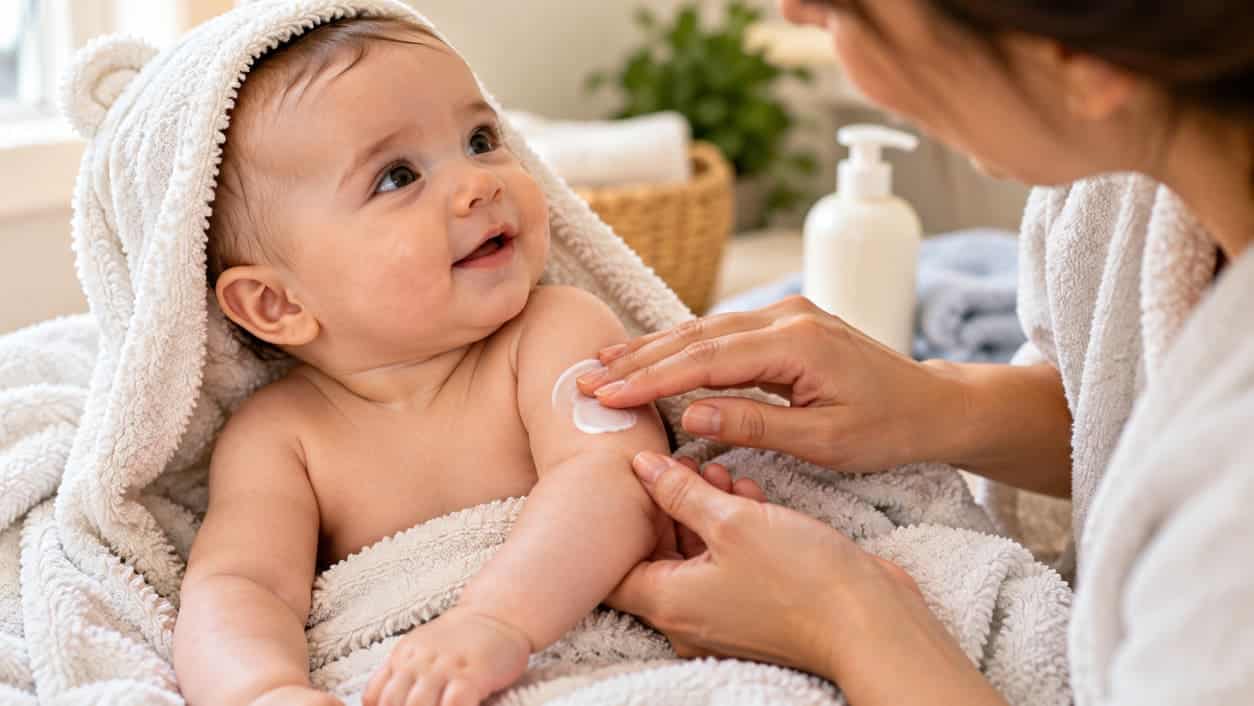
- 3Moisturize right away. Apply a fragrance-free moisturizer immediately after the bath. Thick creams and ointments are generally more effective than lotions or oils.
- 4Moisturize again. The AAD suggests twice a day, or as often as needed. The NHS advises moisturizing at least twice a day and continuing even when skin looks better.
If you’d like a detailed walk-through, here’s a step-by-step bath and moisturizing routine for babies with eczema-prone skin that covers bath frequency, water temperature and what to do in the first few minutes after.
A few more habits that help:
- Go fragrance-free with baby wash, shampoo, laundry detergent and fabric softener. The AAD lists fragranced soaps and shampoos, detergents, fabric softeners, baby powder and wipes among common baby eczema triggers.
- Mind drool and saliva. The AAD suggests a thin layer of plain petroleum jelly around the mouth before feedings and naps if saliva seems to bother the skin.
- Don’t overheat. The NHS notes that being hot can make eczema itchier. Dress your baby in soft, breathable cotton layers you can easily remove.
- Keep nails short, and consider anti-scratch mittens, as the NHS suggests.
- Keep a short skin log. A few photos in the same light and a note on what changed (a new detergent, a cold snap, teething drool) give your pediatrician something concrete to look at.
When to call the pediatrician
Call your baby’s doctor if:
- you think your baby may have eczema, or the dry skin isn’t improving with gentle care
- newborn peeling lasts longer than about three weeks, or the skin looks red, raw or irritated (Cleveland Clinic)
- itching is keeping your baby (and you) up at night
Get prompt care if the skin is blistered, crusty, leaking fluid or has pus-filled spots, if it’s painful, swollen or feels warm, if it suddenly gets worse, or if your baby has a fever or seems unwell. The NHS lists these as possible signs of infection or a more serious problem, and the AAP flags yellow or honey-colored crusting and weepy skin as reasons to talk to your child’s doctor.
And of course, any rash in a very young baby that worries you is worth a call. You are never bothering them.
The bottom line
Dry baby skin is common and usually mild: a bit flaky, not very itchy, and quick to look better with shorter baths and regular moisturizer. Eczema tends to itch, shows up in typical spots like the cheeks and (later) the elbows and knees, comes and goes in flares, and often runs in families. Either way, a gentle routine of short lukewarm baths, fragrance-free products and moisturizer right after bathing is a good place to start, and your pediatrician is the right partner for anything that doesn’t settle down.
About the author: Minesh Patel is a dad of kids with eczema and the founder of a small family-owned skin care company in Santa Rosa, California. He writes about practical, everyday comfort for families living with dry, itchy skin.

Baby Carrier Safety Basics Every Parent Should Know Before the First Carry
9 min read
What is the best easy-to-use baby carrier for quick errands without back pain?
8 min read
How Smart Baby Monitors Track Movement, Rollover, Temperature, Heart Rate and Oxygen
18 min read


