Choose a gas or electric geyser your home can install safely. Check if it heats enough water for busy mornings.
Two showers together may need more water than one small model supplies. Then compare full costs and power-cut needs before buying.

 Published
 14 min read

Can your home use either geyser safely?
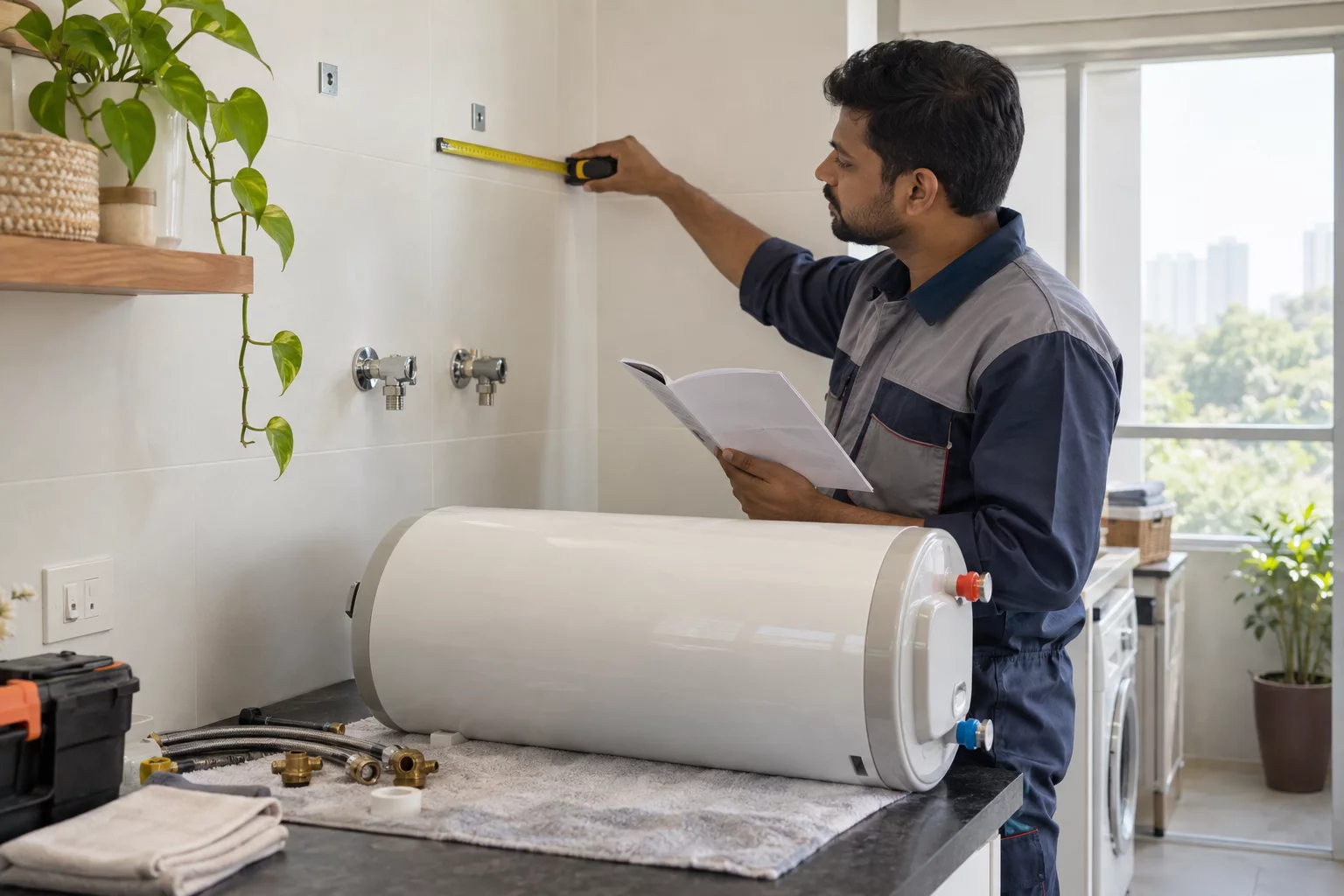
A gas geyser needs a safe way to send fumes outside. An electric geyser needs a circuit suited to its power rating. Before buying, have installers inspect the planned location and connections. New wiring, pipes, or exhaust parts can raise the price.
A faulty gas heater can release carbon monoxide, an invisible poisonous gas. The installer should show where exhaust gases will leave your home. An open window cannot replace the vent required for your model.
Ask where the heater gets air for its flame. Then have the installer show where its exhaust pipe ends outside. The installer must follow the exact manual and local rules. Never install a gas model in a room that its manual rules out.
Many homes buy LPG in cylinders for cooking. In India, the Bureau of Indian Standards warns against LPG instant heaters in closed bathrooms. A gas installer can check the room and exhaust before purchase. Check your building rules for LPG cylinders or gas connections. Follow the instructions for your exact model and fuel.
LPG cylinders also need approved storage and safe connections. Piped gas needs a connection that suits the selected model. The product label must match the fuel available at home. Have the installer confirm that match before buying.
Electric heaters create no fuel exhaust inside the bathroom. Damaged wiring can still cause a painful shock. An electrician should check the circuit and protective ground wire. That wire helps safety devices cut power during a fault. The Indian storage-heater standard checks grounding and electrical leakage.
A working socket cannot prove that your wiring suits the heater. The electrician needs the power rating and installation instructions. They can check the cable, switch, grounding, and safety devices. Water near damaged fittings raises the risk of shock. Ask the electrician to record any required work in the quote.
Pause the purchase if:
- The gas installer rejects the location or exhaust design.
- The electrician finds the circuit unsuitable for that model.
- The seller lacks instructions for the exact heater.
Renting or living in a shared building adds another check. Your landlord or building may limit changes to gas lines. A new electrical circuit may also need building approval.
Settle those details before paying for a heater. A low online price cannot cover an installation your home forbids. If neither installation passes, ask installers about other safe heater options.
How do storage and instant geysers differ?
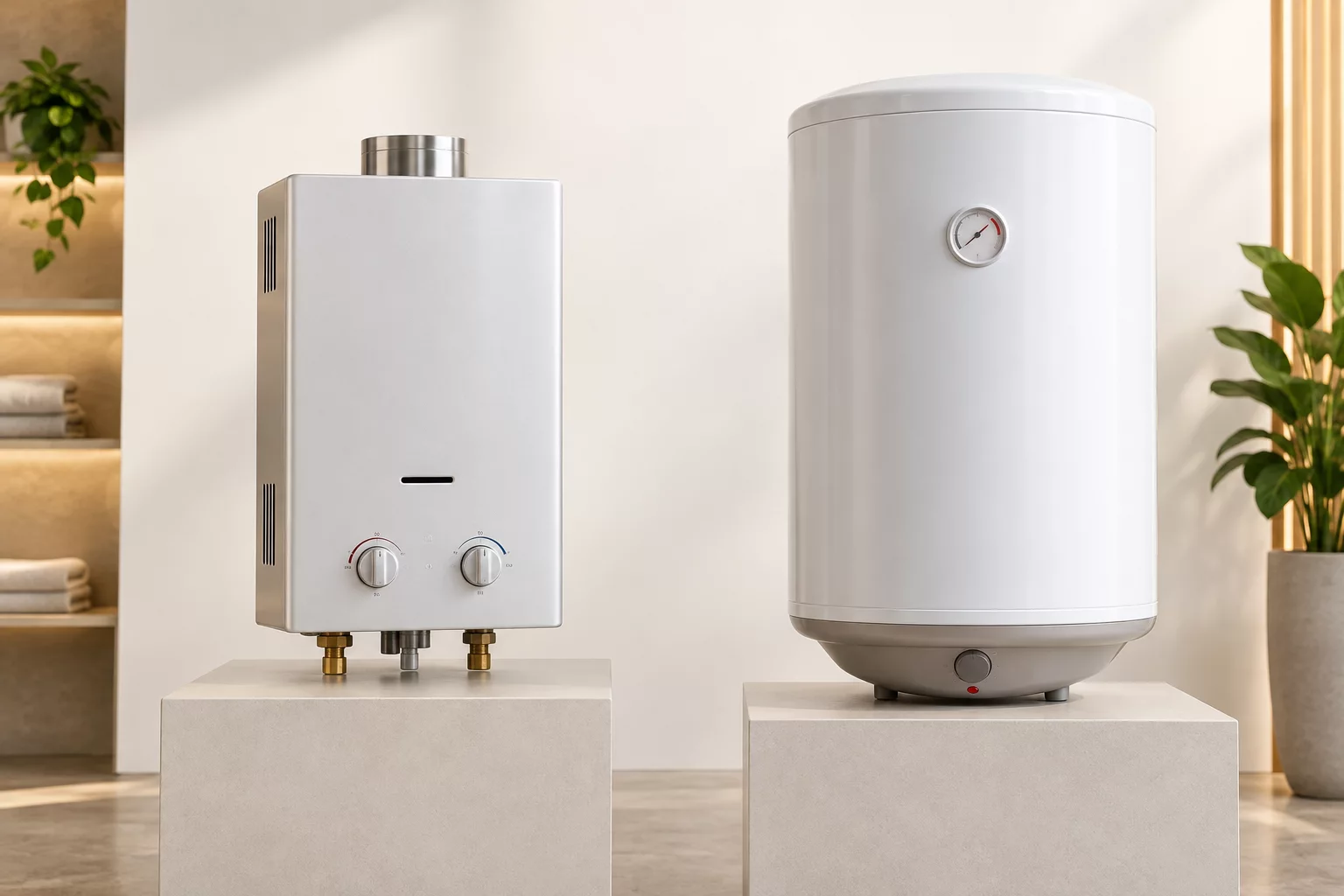
Storage geysers hold heated water inside a tank. Instant geysers heat water while a tap runs. Both gas and electric models can use either design.
Gas models use LPG or piped natural gas, depending on their labels. Electric models heat water with an element or a heat pump.
A tank litre label shows how much water it holds. After several baths, the heater needs time to warm another tankful. Insulation slows heat loss while the water waits.
An instant design avoids heat loss from a stored tank. Another open tap may leave less hot water for your shower. Each instant model heats a limited number of litres per minute. Even instant heaters may take time to warm a distant tap. The cool water inside long pipes must come out first.
Check if a litre figure describes tank size or flow. A six-litre tank holds six litres at once. An instant rating measures litres heated each minute.
The Indian LPG test rates water flow at a 20°C rise. A 20°C rise could warm water from 20°C to 40°C. Check the temperature rise beside each flow rating before comparing models.
Some electric storage geysers use heat pumps. They move warmth from nearby air into the tank. Some models need enough space for air to move around them.
What are the pros and cons of each fuel?
Gas geyser pros
- A suitable gas model can heat water without home electricity.
- Existing approved gas lines may reduce new installation work.
Battery ignition alone cannot power an electric fan or controller. An existing gas line still needs inspection for the new model.
Gas geyser cons
- Fuel pipes and exhaust need safe installation and later inspection.
- A cylinder needs space, deliveries, and the correct connection.
- A fault can expose people to harmful carbon monoxide.
Ask who checks exhaust, joints, and the burner. Save the manual and service contact with your purchase records. Never accept a blocked vent to save wall space.
Electric geyser pros
- An electric heater creates no fuel exhaust inside your bathroom.
- Homes with suitable wiring may need fewer new connections.
- Electric models need no gas cylinder deliveries at home.
Heat pump models can reduce electricity use in suitable spaces. Some units need more room and air around them.
Electric geyser cons
- New wiring can raise the cost of a high-power model.
- An electric heater cannot heat water during power cuts.
- A small electric storage tank may empty before everyone finishes bathing.
Tank parts can also need service over time. The manual should name any checks and service intervals. Compare those costs alongside purchase price and expected bills.
Which geyser can supply enough hot water?
Size a geyser around your busiest hot-water period. Two showers at once need more flow than two separate baths. Two children bathing one after another may empty a small tank.
Check your busiest hot-water period:
- Count the showers and hot taps your family opens together.
- Have an installer measure how much water each one uses.
- Ask the installer how cold your water gets during winter.
- Compare that need with the exact heater rating.
For instant heaters, add the flows from taps used together. Cold incoming water can lower the hot flow a heater delivers. If output falls short, compare another model or use fewer taps.
For storage heaters, ask how many baths the tank can supply. Check how long it takes to heat another tankful. A larger tank needs more space and may cost more.
Some instant models need a minimum water flow before heating starts. Rinnai lists that limit for its tankless heaters. Ask the installer to check the limit at your shower. Low water flow may stop a model from heating at all.
One person may shower while someone rinses breakfast dishes. A single shower test would miss that extra hot tap. Tell the installer which outlets can open together. They can measure water flow without assuming every shower matches.
A tank label alone cannot promise a fixed number of baths. Shower length, water temperature, and cold-water mixing all change use. The heater may warm more water while someone bathes.
Find out how much hot water it supplies during one hour. Some product sheets call that number the first-hour rating. ENERGY STAR defines it as output from a fully heated tank. Check the testing conditions before comparing different product sheets.
An instant heater needs both flow and temperature rise figures. Check how many hot litres it supplies with cold winter water. Colder water needs more heating before reaching your shower.
Ask the seller to use your coldest tap-water temperature. Use the product chart to compare flow at that temperature.
Space can settle a close choice between two suitable models. A larger tank needs enough space, support, and service access. A heat pump needs room for air around it. Your installer should leave room for future heater service. Measurements on a product page cannot confirm space inside your bathroom.
How do gas and electric geysers compare?
Gas and electric geysers can both heat bath water well. Compare the models that passed your safety and hot-water checks.
| What to compare | Gas geyser | Electric geyser |
|---|---|---|
| Energy source | LPG cylinder or piped gas | Home electricity supply |
| Installation check | Approved location, fuel pipes, and exhaust | Suitable circuit, grounding, and protective devices |
| Energy label in India | Compare fuel use and hot-water output | BEE stars apply to storage electric models |
| During power cuts | Some models work; powered models stop | Heating stops; stored water may remain warm |
| Monthly bill | Local gas price and amount used | Local electricity rate and amount used |
| Regular service | Check fuel parts, exhaust, and model instructions | Check wiring, tank parts, and model instructions |
| Main child hazard | Hot water and harmful exhaust after a fault | Hot water and electrical shock after a fault |
How much will each geyser cost to buy and use?
Gas or electric can cost less, depending on your home and fuel prices. Compare models that can heat the same amount of water. A gas quote may include new pipes and an exhaust vent. An electric quote may include a stronger circuit or new wiring.
Use the same bathing routine for both quotes. The table below lists the costs and units your family needs. Fill the gas and electric columns using written local quotes.
| Cost item | Gas quote | Electric quote |
|---|---|---|
| Heater purchase | Exact model price | Exact model price |
| Installation | Fuel pipes, exhaust, approved fittings | Circuit, wiring, switch, approved fittings |
| Amount used each month | LPG kilograms or piped gas units | Electricity units in kWh |
| Price for each unit | LPG price per kilogram or piped-gas unit price | Your billed electricity rate per kWh |
| Scheduled service | Maker service visits and replacement parts | Maker service visits and replacement parts |
| Total for chosen period | Purchase, installation, fuel, service | Purchase, installation, power, service |
Your electricity bill counts energy in kilowatt-hours, written as kWh. At a sample price of ₹8 per unit, 30 kWh costs ₹240. Ask your provider which rate applies to extra heater use.
Monthly LPG cost equals kilograms used times your local price. Piped gas cost uses billed units times the price per unit. Add cylinder delivery charges where they apply.
Save the unit beside every number on your quote sheet. A kilogram of LPG differs from a piped-gas billing unit. Ask for a monthly estimate based on your actual bathing pattern. Then multiply each monthly cost across the same number of months.
For example, compare purchase and running costs across five years. Add sixty months of expected energy and service costs. Include the full installation charge at the start. Review the result again if local fuel prices change. A cheaper purchase can cost more across those years.
A heater can use less energy yet cost more to operate. Tank insulation and bath habits change how much energy you use. An insulated tank can still use energy between baths. A star label cannot predict your exact bill.
The Bureau of Energy Efficiency labels storage electric geysers in India. That label cannot compare a gas geyser directly. Ask each seller for model energy use and hot-water output. A model heating less water may look cheaper on paper.
Get the assumptions behind any monthly estimate in writing. The power rating shows how quickly the heater draws electricity. That number alone cannot predict your monthly bill.
Your bill depends on energy used across actual days. Hot-water habits, inlet temperature, and tank losses affect that use. A written estimate should name its assumptions and units.
Will a gas geyser work during a power cut?
Some gas models heat during a power cut; others need electricity. Ignition, fans, and controls change what happens during an outage. Rinnai tankless gas heaters need power from a wall socket. One Crompton LPG model lists a battery power source.
Check the booklet for any plug, fan, controller, or battery. Ask the installer about gas supply and exhaust during an outage.
Electric heaters stop heating when the power goes out. A storage tank may still hold warm water for another bath. Earlier use and tank insulation change how much remains.
Ask the seller: Will the exact model heat water without home electricity? Request a written answer if outages affect your family.
How can either geyser be safer for children?
Either heater can send water hot enough to burn a child. Check water at the tap before every bath. The US CPSC urges close supervision during bathing.
For home water heaters, US safety advice recommends 49°C (120°F) or lower. The US CDC notes hotter stored water can reduce germs. Hotter water can burn a child more quickly. Have a qualified plumber check both tank and tap temperatures. A mixing valve adds cold water before water reaches the tap.
Remain within reach while young children bathe. A tank thermostat and tap temperature can differ. Ask the plumber which tap valve suits your shower.
Gas heaters need secure fuel pipes and working exhaust. Book service visits as the model manual recommends. A carbon monoxide alarm cannot replace heater maintenance. Ask a qualified installer where any carbon monoxide alarm belongs.
If a carbon monoxide alarm sounds, move everyone outside immediately. Call your local emergency service from fresh air. Never enter again until emergency workers permit it. A technician must inspect a faulty heater before further use.
Have an electrician check grounding and protective devices near bathrooms. Never use an extension lead near a bath or shower. If a heater causes shocks, stop use and call an electrician.
What upkeep does each heater need?
Both fuels need periodic service for safe, dependable heating. The exact tasks depend on the heater and local water. Read the maker schedule before comparing service prices.
For a gas model, request checks of the burner and exhaust. A technician should also inspect fuel connections for faults. Ask if the visit includes cleaning any water inlet filter. Never dismantle fuel parts to perform a home check.
For an electric storage model, request the tank service instructions. Some tanks include a metal rod that helps protect the tank. A technician can inspect that part when the manual requires. An electrician can check switches and grounding during electrical service.
Minerals in water can build up inside heaters. Rinnai recommends cleaning filters and removing mineral buildup when needed. The cleaning schedule depends on your local water and model. Ask the service team what your exact model needs.
Look at warranty terms alongside the service schedule. A long tank warranty may exclude parts or labour. Find out who will visit your address if trouble starts. Check the charge for a visit after warranty ends. Check local service access and spare parts for that model.
No heater lasts the same number of years in every home. Water quality, daily use, and maintenance change how heaters age. Request the written warranty for the exact model. Compare coverage, service access, and costs before accepting lifespan claims.
Is gas or electric better for the environment?
Neither fuel has a fixed environmental advantage for every home. Gas heaters release exhaust where they heat the water. Electric geysers create no fuel fumes inside the home.
Power plants can still release carbon dioxide while making electricity. The Central Electricity Authority tracks those emissions from Indian power plants. Your power source and heater energy use can change the result.
Heat pumps can use less electricity than ordinary electric geysers. They can also cut total emissions in some cases. Ask which models suit your space and local climate. Compare the energy use for models available near you.
Frequently asked questions
What are the disadvantages of a gas geyser?
A gas geyser needs safe exhaust, fuel connections, and regular service. Cylinders take space and need timely refills. A blocked vent can expose your family to poisonous carbon monoxide.
Which type of geyser is best for a home?
Neither type wins for every home or family. First check where each model can go and how much hot water it supplies. Then compare installed prices and expected monthly energy costs.
What are the disadvantages of an electric geyser?
Electric models need suitable wiring and protective grounding. They stop heating during power cuts, though tanks may retain warmth. New wiring and tank service can add to your costs.
Does a geyser increase the electricity bill?
Yes, an electric geyser adds electricity use whenever it heats water. Some gas models also need mains power for controls. The extra charge depends on use, the heater model, and your electricity rate.
Sources
- Bureau of Indian Standards: LPG instant water-heater compendium
- Bureau of Indian Standards: 2024 LPG flow-rating update
- Bureau of Indian Standards: Electric Storage Heater Testing Manual
- Bureau of Energy Efficiency: Standards and Labelling Programme
- US Department of Energy: Consumer Water Heaters
- US Department of Energy: Gas Tankless Water Heaters
- US Department of Energy: Residential Water Heater Purchasing
- US Consumer Product Safety Commission: Carbon Monoxide Fact Sheet
- US Consumer Product Safety Commission: Childproofing Your Home
- US Centers for Disease Control and Prevention: Preventing Waterborne Germs at Home
- Central Electricity Authority: Indian Power Sector CO2 Database
- ENERGY STAR: How Heat Pump Water Heaters Work
- ENERGY STAR: Heat Pump Water Heater Design Considerations
- US Department of Energy: Heat Pump Water Heaters
- ENERGY STAR: Residential Water Heater Product Criteria
- Rheem: Water Heater Technical Bulletins
- Rinnai: Residential Water Heater FAQ
- Crompton: Six-Litre LPG Gas Water Heater